
Abstract
Insurance faces tighter regulation,more competition,and complex customer demands.Professional capability and compliance are now critical strategic assets.Instadesk Intelligent Training delivers a next-generation,scenario-based,closed-loop sales capability system—not just a training tool,but an integrated solution to strengthen compliance and enhance professional competence in insurance sales.
I.Three Major Challenges Facing the Insurance Industry
1.High Compliance Risk and Insufficient Effectiveness of Traditional Training
Insurance sales operates under strict regulatory supervision in the Malaysian insurance market.Requirements related to sales process recording,traceability,and the prevention of misleading sales practices define clear regulatory boundaries for sales activities.
However,traditional classroom-based training often places excessive emphasis on form rather than effectiveness.In such settings,trainees remain passive listeners,making it difficult for them to develop a deep understanding of regulatory requirements or translate abstract rules into practical sales behavior.As a result,complaints and regulatory penalties caused by inappropriate sales wording,unclear commitments,or insufficient risk disclosure continue to occur in real sales scenarios.
2.Long Onboarding Cycles for New Agents and Low Productivity Efficiency
The insurance industry is characterized by a relatively high rate of personnel turnover,and the cultivation of new agents requires continuous and substantial investment.Traditional mentor-apprentice training models present several limitations.They rely heavily on individual experience and are difficult to standardize or replicate at scale.
For new agents,the transition from onboarding to independently completing compliant sales often takes several months.During this period,companies bear significant costs related to base compensation and training.At the same time,limited opportunities for practical simulation mean that new agents frequently feel nervous when facing real customers,use rigid sales scripts,achieve low conversion rates,and face higher risks of crossing regulatory boundaries due to insufficient experience.
3.Low Efficiency in Skill Enhancement and Limited Transfer of Best Practices
Even experienced sales professionals encounter challenges when dealing with complex insurance products or high-net-worth clients,particularly in areas such as professional explanation,needs analysis,and asset allocation.Within organizations,the successful techniques and advanced sales scripts of top performers often exist as tacit knowledge,making them difficult to transmit through standardized training formats.
As a result,traditional experience-sharing sessions deliver limited impact.Sales personnel lack opportunities for repeated practice in highly realistic scenarios and find it difficult to break through performance ceilings.

II.Three Core Capability Pillars of Instadesk Intelligent Training
1.Intelligent Script Generation Under the AI Course-Building Model
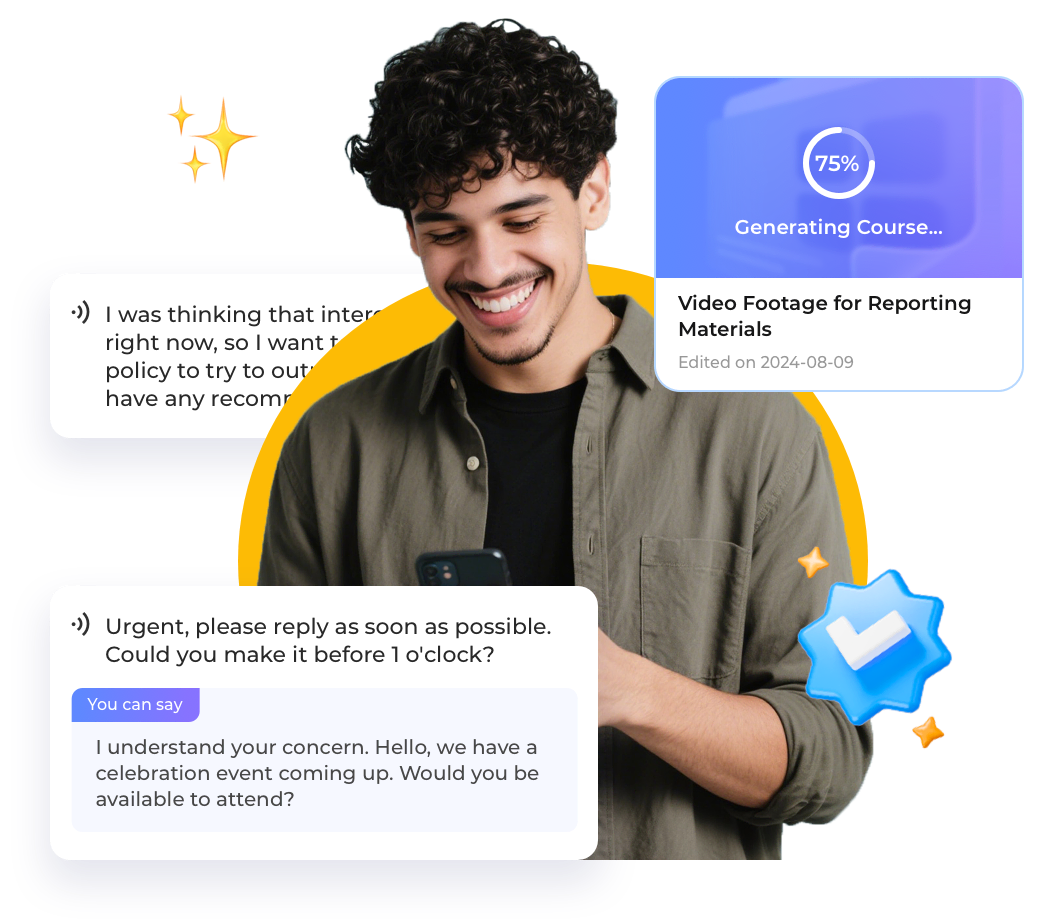
Instadesk Intelligent Training offers multiple core functionalities,with AI-based course creation serving as its foundational strength.The system can generate compliant training scripts within minutes based on simple inputs from training administrators describing specific business scenarios.
Examples include explanations of guaranteed returns in annuity insurance sales or compliant inquiry processes during health disclosure stages.The system also supports standardized workflow configuration through a visual SOP canvas.For processes such as policy underwriting and recorded sales interactions,strict procedural requirements can be configured and enforced.Trainees are guided through standard workflows,with mandatory reminders and assessments at critical compliance checkpoints.
2.Continuous 24-Hour Training Through the AI Coaching Model
Instadesk Intelligent Training supports AI-driven coaching that enables immersive one-on-one scenario simulations.Trainees can interact in real time via voice or text with digital customer avatars representing different personalities and backgrounds.
Whether practicing product recommendations for younger customer segments or conducting insurance solution discussions with business owners,the system provides highly realistic training environments.During coaching sessions,the system draws on its built-in compliance knowledge base to deliver real-time risk s for sales statements before they are communicated.
3.Precise Capability Evaluation Under the AI Assessment Model
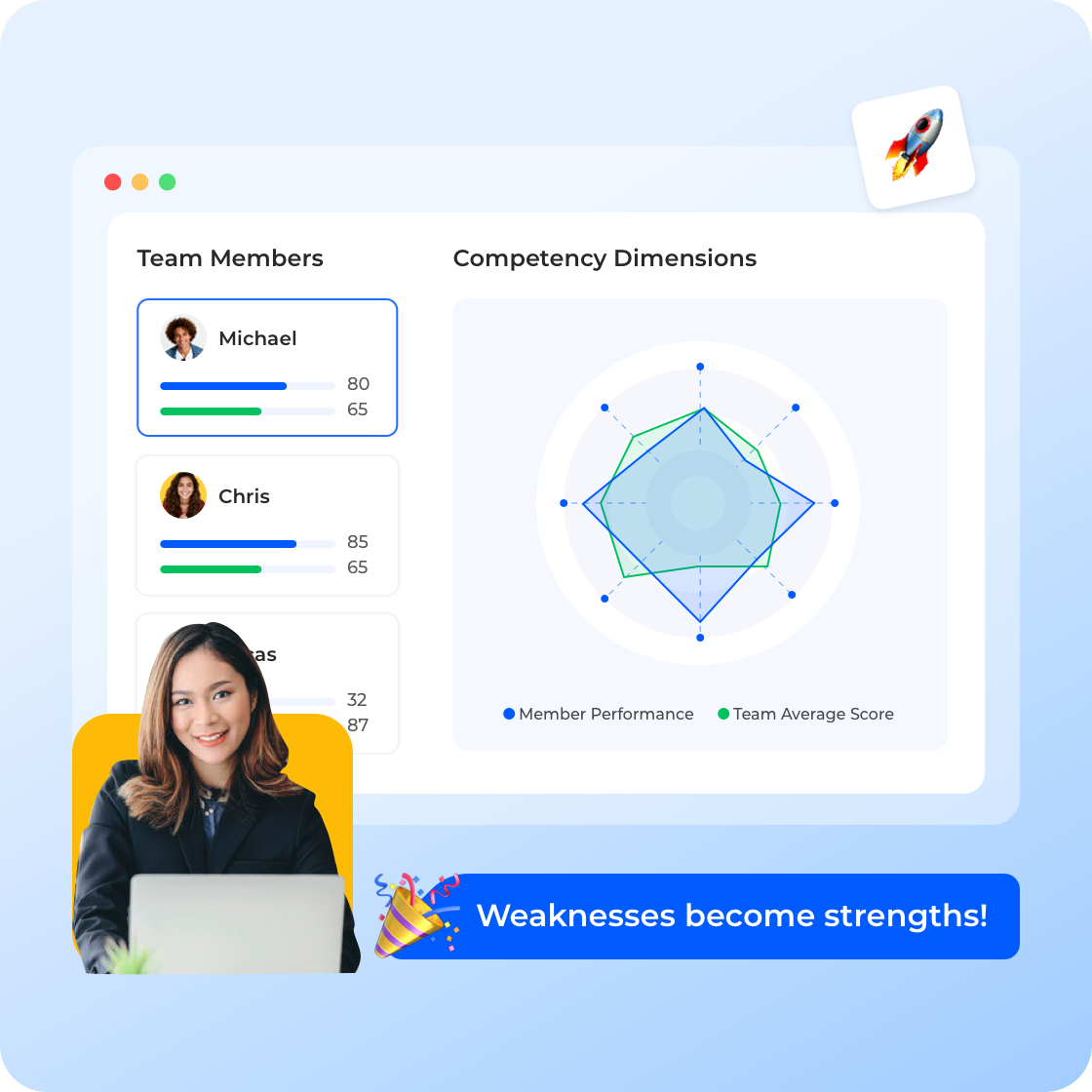
Training without effective evaluation fails to deliver meaningful outcomes.The AI assessment module of Instadesk Intelligent Training provides multi-dimensional quantitative evaluation to generate clear competency profiles and personalized improvement paths for each trainee.
The system applies a 14-dimension capability radar model,covering areas such as professional understanding,logical expression,and empathetic communication.After each simulated interaction,the system automatically generates individual capability radar charts,enabling trainees to identify strengths and areas requiring improvement.
Instadesk Intelligent Training,with its intelligent design deeply integrated into real business scenarios,is increasingly becoming a strategic choice for leading insurance companies seeking to strengthen compliance and enhance sales performance.