Manual calling is slow, expensive, and fails to personalize at scale. Teams grapple with low conversion rates, compliance risks, and the high cost of multilingual support. These inefficiencies drain resources and limit growth in competitive markets.
Instadesk provides an AI-powered Voice Bot that transforms outbound communication from a costly chore into a strategic asset. The Voice Bot leverages large language models to conduct natural, intelligent conversations that feel human. Businesses using Instadesk see meaningful improvements in efficiency, customer engagement, and revenue.
What Key Pain Points Are Faced?
High Costs & Slow Task Setup – Many companies struggle with exorbitant cold start costs and the challenge of rapidly setting up multilingual operational tasks.
Inherent Limitations of Manual Teams – Manual sales teams are constrained by time zone restrictions, language gaps, and repetitive low‑value tasks.
Severe Business Impacts – These limitations directly lead to inconsistent sales performance and a high rate of business compliance violations, eroding operational efficiency and brand trust.
From our experience: In deploying the Instadesk Voice Bot for clients across Southeast Asia and the Middle East, we have observed that teams consistently report faster outbound campaign setup and reduced manual dialing effort. While specific conversion improvements vary by industry and campaign design, the shift toward automated, multilingual calling has been a recurring operational win.
What Is Instadesk Voice Bot?
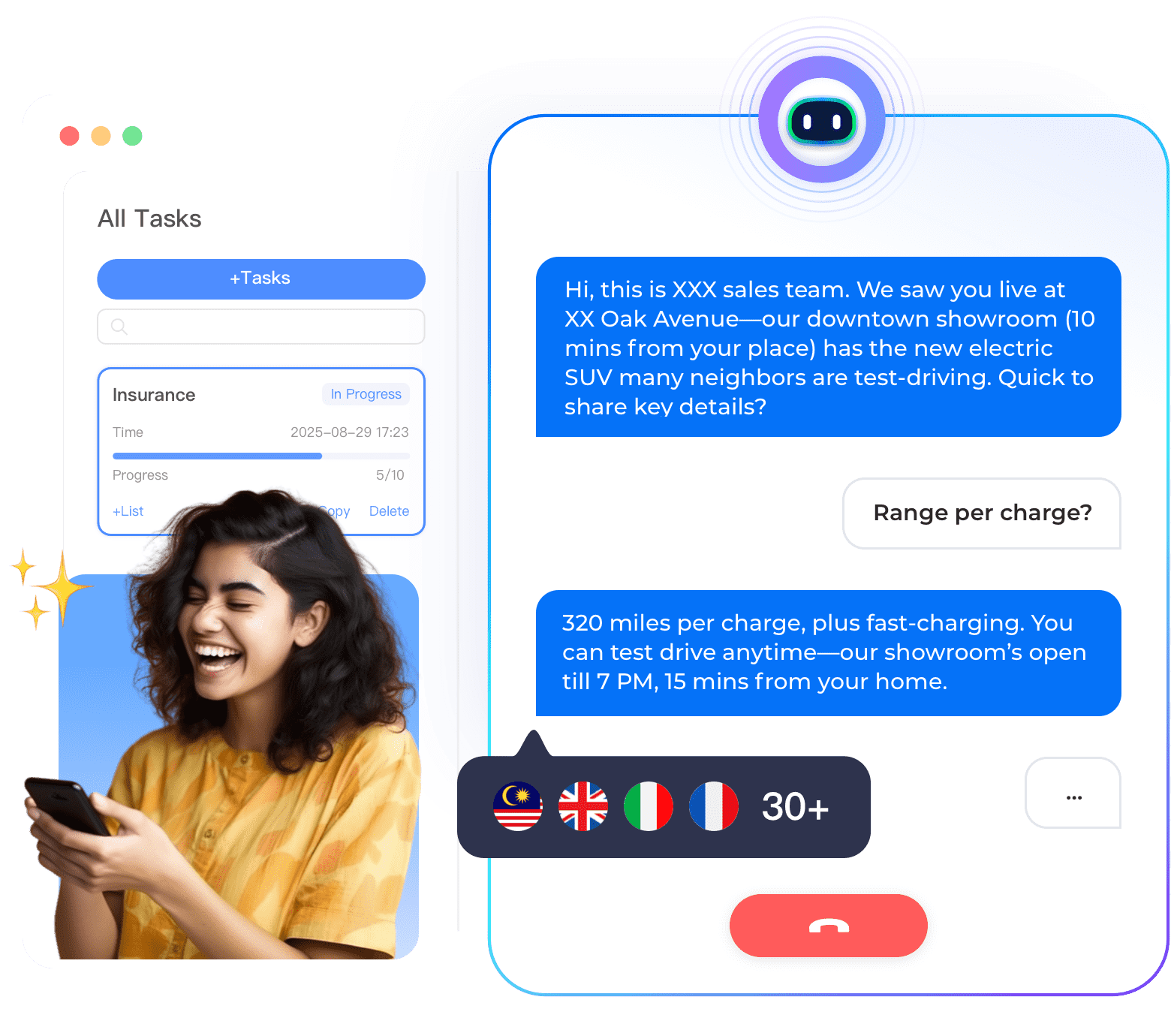
The Instadesk Voice Bot is engineered to deliver a highly accurate and personalized interactive experience. It integrates leading ASR (Automatic Speech Recognition) and TTS (Text-to-Speech) technologies to support a wide range of languages, including bilingual capabilities like Malay and English. Instadesk ensures that every interaction feels local, deeply adapting to regional communication habits.
Key Features That Define the Instadesk Experience
Multi‑round Voice Conversations. The Instadesk Voice Bot supports natural multi‑turn exchanges, maintaining context and coherence throughout the conversation.
Intelligent Interruption. The system is trained to respond quickly, allowing customers to interrupt and ask questions naturally without breaking the flow.
Zero‑Code Visual Orchestration. Business teams can build a voice bot rapidly using a drag‑and‑drop interface, significantly reducing configuration time compared to traditional methods.
Why Choose Instadesk Voice Bot?
The shift from manual labor to automation brings measurable results that impact the bottom line. By simulating the workflow of effective sales personnel, the Instadesk Voice Bot identifies customer intent with high accuracy. Users have reported strong improvements in customer satisfaction and sales conversion rates when deploying the solution in appropriate scenarios.
Operational Advantages
Efficiency Gains – One Instadesk Voice Bot can perform batch calls around the clock, representing a substantial multiplier over manual output.
Emotional Intelligence – The large model assesses the customer’s emotional state in real time, intelligently adjusting conversation content to build rapport.
Automated Lead Management – The bot automatically tags conversations and synchronizes potential customers with your CRM, increasing lead processing efficiency.
How It Works: A Comprehensive 5‑Step Framework
The Instadesk Voice Bot operates through a sophisticated yet user‑friendly technical framework, ensuring that every outbound task is optimized for connection and conversion.
1. 24/7 AI Voice Bot Batch Calling
The system provides non‑stop intelligent outbound calling that significantly boosts efficiency. It utilizes intelligent call replay, flash messaging, and unavailable number detection strategies to improve connection rates. The bot also enables intelligent customer segmentation based on age, gender, and location for targeted multi‑channel calling.
2. Intelligent Real‑Person Interaction
Chatting with an Instadesk Voice Bot feels like talking to a human expert. The bot is trained with data from numerous industries, allowing it to understand customer intent and dynamically adjust call scripts. By infusing voices with emotional elements, the bot increases call duration and builds stronger customer rapport.
3. Rapid Zero‑Code Deployment
The drag‑and‑drop interface eliminates the need for complex line configuration, substantially reducing launch cycle time and script optimization costs. The system automatically diagnoses abnormal conversations, quickly analyzes the cause, and allows for rapid tuning.
4. Data Confidentiality and Security
Security is a cornerstone of the Instadesk Voice Bot platform. Instadesk uses desensitized display and data storage to ensure that no plain text numbers exist in the system. With call link encryption and private deployment options, the platform provides enterprise‑grade data protection and helps reduce business compliance risks.
5. Advanced Data Analysis and CRM Integration
Instadesk Voice Bot provides one‑click access to basic call data, including potential customers and user focus areas. The system automatically creates sales leads and synchronizes them with your CRM. It can then notify sales and customer service teams via integrated messaging channels, ensuring timely follow‑up.
Platform Security & Data Handling
For enterprises managing outbound voice campaigns, data protection is critical. Instadesk Voice Bot includes: encryption of calls and data in transit and at rest, desensitized number display, role‑based access controls for call recordings and logs, configurable data retention policies, and private deployment options for customers with additional compliance needs. Compliance with regional regulations such as GDPR or local telemarketing laws remains the customer’s responsibility.
Conclusion
Instadesk Voice Bot is not just a tool—it is a visually orchestrated agent designed for the modern enterprise. By delivering substantial gains in outbound call efficiency, Instadesk helps your brand stay ahead of the competition while reducing operational costs and improving customer engagement.