Introduction
Here is a number that should keep every contact center manager awake at night:most organizations manually audit less than 5%of their customer interactions.Some audit as little as 1–2%.
That means for every hundred calls,chats,and emails your team handles,you have no idea what happened in ninety‑five of them.You do not know if an agent made an unauthorized promise.You do not know if a compliance violation slipped through.You do not know if a customer was left frustrated and about to churn.
For decades,this 5%sampling rate was accepted as a necessary compromise.Listening to every call was impossible.Reviewing every chat transcript would take a team of dozens.Quality assurance was a statistical game—you sampled a tiny fraction,assumed the rest was fine,and hoped nothing blew up.
AI‑powered quality inspection changes every assumption.In 2026,100%coverage is not just possible—it is expected.Regulators are demanding it.Customers are benefiting from it.And the organizations still relying on manual sampling are falling behind.
This guide explains why quality inspection has become mission‑critical,how AI transforms what is possible,and what to look for in a modern quality inspection platform.
The Hidden Cost of Manual Sampling
Traditional QA programs are built on a model that made sense in the pre‑AI era.A team of quality analysts listens to a random selection of calls each week.They score each call against a checklist.They provide feedback to agents.They generate reports on trends.
But this model has three fundamental flaws that no amount of process improvement can fix.
The coverage gap is enormous.A contact center handling 50,000 calls per month with five QA analysts each reviewing 50 calls per week covers just 2%of total volume.The other 49,000 calls are never examined.Compliance violations,coaching opportunities,and customer sentiment signals in those 49,000 calls remain invisible.
Human judgment is inconsistent.Two QA analysts listening to the same call will often give different scores.One might flag a particular phrase as aggressive;another might miss it entirely.Calibration sessions help,but they cannot eliminate evaluator bias.This inconsistency means agents are not being judged fairly,and trend data is polluted by human variance.
Feedback loops are weeks long.By the time a quality analyst listens to a call,scores it,and delivers feedback to the agent,the interaction happened weeks ago.The agent cannot remember the specific call.The coaching moment has passed.The behavior that needed correction has already been repeated dozens of times.
These problems are not minor inconveniences.They are structural limitations of manual QA.And they are the reason that organizations serious about customer experience and compliance are moving to automated,AI‑driven quality inspection.
What AI‑Powered Quality Inspection Does Differently
AI quality inspection is not a faster version of manual sampling.It is a fundamentally different capability.
100%coverage.The most obvious difference is also the most important.AI systems can analyze every single call,chat,email,and social media interaction.Nothing falls through the cracks.When a compliance violation occurs,you know about it immediately—not months later after a customer complaint triggers an investigation.
Consistent,objective scoring.AI applies the same criteria to every conversation.It does not get tired in the afternoon.It does not have favorites.It does not unconsciously score the agent who brought donuts more generously.The scores are consistent,auditable,and free from human bias.
Real‑time or near‑real‑time analysis.Many AI quality platforms can analyze calls as they happen or within minutes of completion.Agents can receive feedback while the interaction is still fresh.Supervisors can intervene on a live call if the AI detects a compliance risk or a customer about to churn.The feedback loop collapses from weeks to minutes.
Granular,multi‑dimensional insights.A human analyst listening to a call might note“agent handled objection well.”An AI system can score across dozens of dimensions:tone,pace,empathy,compliance phrase inclusion,objection handling sequence,question‑to‑statement ratio,interruption patterns,and sentiment shifts.These granular metrics reveal patterns that no human could manually extract.
Pattern detection across the entire dataset.The most valuable output of AI quality inspection is not the score on a single call—it is the trend across thousands of calls.Which types of calls generate the lowest customer satisfaction?Which agents struggle with specific objection types?Which compliance violations are becoming more frequent?AI can answer these questions across your full volume,not just a tiny sample.
Why 2026 Is the Tipping Point for Quality Inspection
Three forces have converged to make AI quality inspection an urgent priority rather than a nice‑to‑have.
Regulatory pressure is intensifying.In Asia,new regulations are raising the stakes for compliance monitoring.Malaysia’s Consumer Credit Act 2025,which came into force on 1 March 2026,imposes stricter conduct rules on collection agencies and financial institutions.Singapore’s PDPA amendments increased fines for data breaches.Indonesia’s OJK requires full recording of financial service interactions.In each case,regulators expect documented evidence of compliance monitoring.Manual sampling no longer meets the standard of care.
Customer expectations are rising.Customers are less tolerant of poor service than ever before.A single bad interaction can trigger a public complaint on social media.And the most damaging failures often happen in the interactions that never get reviewed—the 95%that manual QA misses.AI quality inspection gives you visibility into those hidden failures before they become public crises.
The technology has matured.Early speech‑to‑text engines made frequent errors,especially with accents and industry‑specific terminology.Early sentiment analysis was crude,flagging any raised voice as“angry.”In 2026,the technology has improved dramatically.Word error rates for major languages are below 10%in production environments.Large language models can understand context,detect sarcasm,and distinguish between“I’m frustrated with the product”and“I’m frustrated with the agent.”The technology is ready for enterprise deployment.
What to Look for in an AI Quality Inspection Platform
Not all quality inspection platforms are equal.Here are the capabilities that separate enterprise‑grade solutions from lightweight tools.
Accurate,language‑aware transcription.The foundation of any quality inspection system is accurate speech‑to‑text.For enterprises operating across Asia,this means support for Bahasa Malaysia,Mandarin,Thai,Vietnamese,Tamil,and English—including code‑switching,where speakers mix multiple languages in a single sentence.Many Western platforms handle English well but degrade significantly on regional languages.
Flexible rule engine.Compliance requirements vary by industry,region,and even by individual campaign.Your quality platform must allow you to define custom rules without engineering support.Some rules are rigid and exactly matched(e.g.,“agent must say‘this call may be recorded’”).Others require semantic understanding(e.g.,“agent may not promise guaranteed returns”).Your platform should support both approaches.
Real‑time ing.For high‑risk interactions,post‑call analysis is not enough.You need the ability to trigger real‑time s when a compliance violation occurs,when a customer sentiment score drops below a threshold,or when an agent deviates from a required script.These s can go to a supervisor for immediate intervention.
Integration with agent coaching workflows.Quality inspection should not just identify problems—it should trigger improvements.Look for platforms that integrate with agent coaching systems,automatically creating coaching tasks when an agent’s scores fall below target,and tracking improvement over time.
Omnichannel support.**Customers interact across voice,chat,email,WhatsApp,and social media.Your quality platform must analyze all of these channels in a unified way,applying the same scoring criteria regardless of the channel.
The Cost of Doing Nothing
Some organizations hesitate to invest in AI quality inspection because they see it as an additional expense.This framing misses the larger picture.
The cost of a compliance violation often runs into the millions—not just in fines,but in legal fees,remediation costs,and reputational damage.The cost of losing a customer due to poor service is the lifetime value of that customer,multiplied by the number of churned customers you never knew you were losing.The cost of inconsistent agent coaching is lower performance across your entire team,month after month.
Against these risks,the cost of AI quality inspection is remarkably low.Most enterprise platforms charge based on call volume,with per‑minute rates that are a fraction of the cost of the call itself.The ROI calculation is straightforward:if the platform catches even one major compliance violation per quarter,it has paid for itself many times over.
More importantly,the cost of doing nothing is rising.Regulators are demanding more oversight.Customers are less forgiving.Competitors are adopting AI quality inspection and using the insights to improve faster than you.Inaction is not neutral—it is falling behind.
Instadesk Quality Inspection:Built for Modern Enterprises
For organizations seeking an enterprise‑grade quality inspection platform,Instadesk offers a comprehensive solution designed for the unique demands of the Asia‑Pacific market.
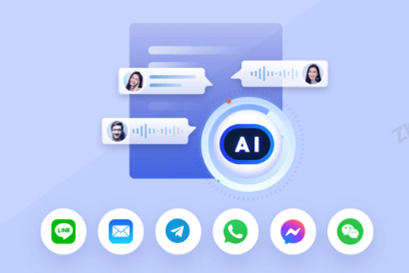
Full omnichannel coverage.Instadesk analyzes voice calls,WhatsApp chats,email threads,live chat transcripts,and social media interactions—all in a single platform.The same compliance rules apply across every channel,with a unified dashboard showing performance trends.
Multilingual AI.Unlike Western platforms that treat Asian languages as an afterthought,Instadesk’s AI is natively trained on Bahasa Malaysia,Mandarin,Thai,Vietnamese,Tamil,and English.It handles code‑switching,regional dialects,and industry‑specific terminology accurately.
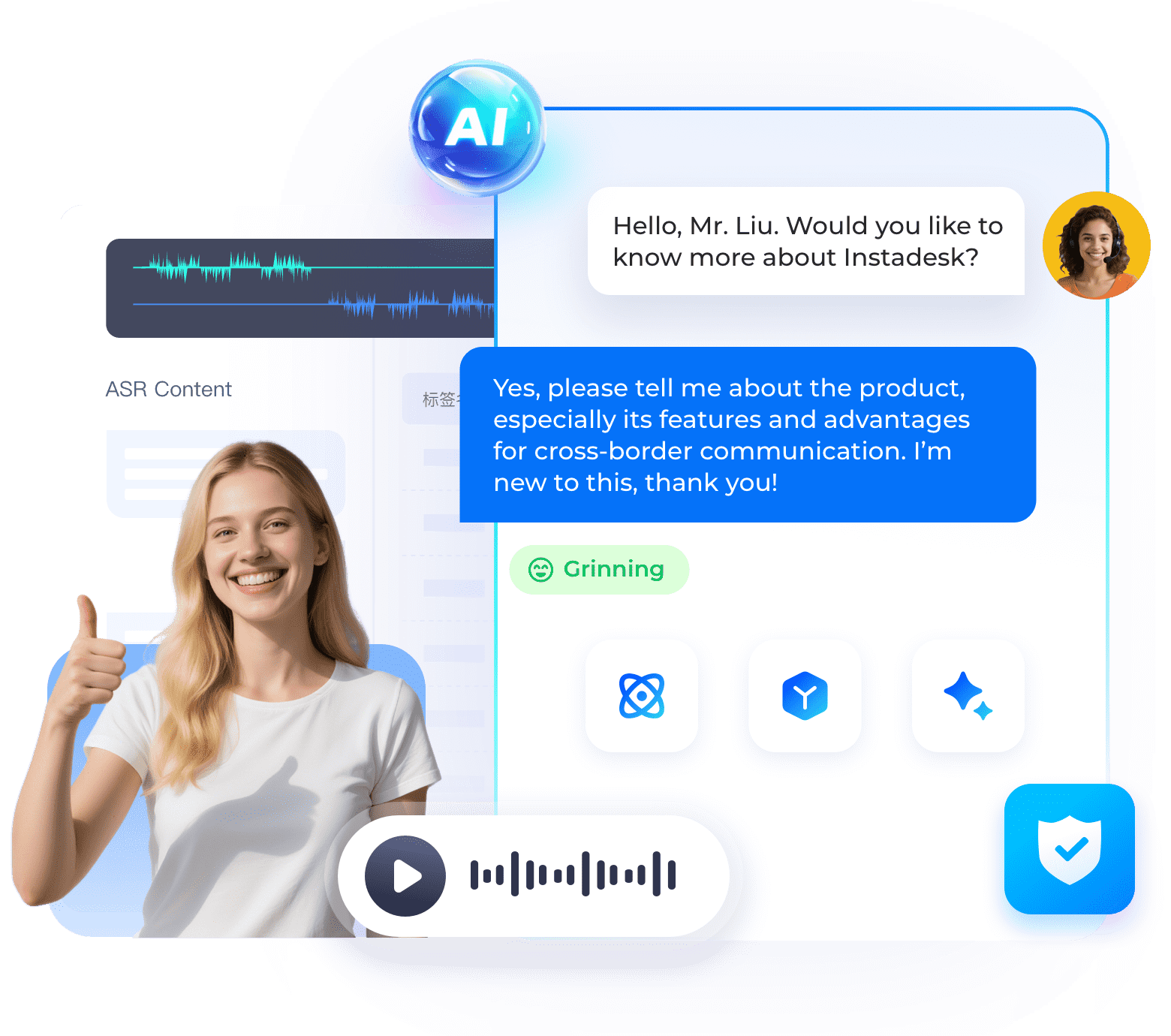
100%automated quality inspection.The platform reviews every interaction,not just a sample.When a compliance violation occurs,you know about it immediately.Trends are based on complete data,not statistical projections.
Real‑time s and dashboards.Supervisors receive real‑time notifications when risk events occur—an agent using prohibited language,a customer showing extreme frustration,a compliance requirement missed.Dashboards show performance by agent,team,and channel,with drill‑down to individual interactions.
Integration with coaching workflows.Quality scores flow directly into agent coaching tasks.Low‑performing agents are automatically assigned remediation training.Top performers are flagged for recognition and peer coaching.
Flexible deployment.For regulated industries with data residency requirements,Instadesk offers on‑premise and private cloud deployment.For organizations seeking rapid deployment,SaaS options are available with local data nodes in Singapore and Malaysia
Conclusion
The era of 5%manual sampling is ending.Regulators expect more.Customers deserve more.And the technology now makes 100%coverage not only possible but practical.
AI quality inspection is not a luxury for large enterprises.It is a necessity for any organization that takes compliance seriously and wants to continuously improve customer experience.The question is no longer whether to adopt automated quality inspection,but how quickly you can deploy it.
Organizations that move early will catch violations before they become crises.They will identify coaching opportunities before they become performance gaps.They will see patterns that their competitors,still relying on manual sampling,will miss entirely.
Those that wait will continue to fly blind on 95%of their customer interactions—hoping nothing goes wrong,and finding out months later when it already has.