Author: Issac
Bio: A senior omnichannel digital operations expert with 10 years of in-depth industry experience, proficient in integrating public and private domain resources across all channels. Focusing on data-driven strategies, he excels at precision traffic acquisition, user lifecycle management, and user value deepening. Having led multiple projects, he has achieved doubled traffic volume and over 40% increase in user retention rate.
In today’s business landscape—marked by rising labor costs and skyrocketing demand for customer outreach—intelligent voice robots have evolved from "auxiliary tools" to core infrastructure. For enterprises focused on cutting costs, boosting efficiency, and driving precise operations, they’re no longer optional.
I. What Is Instadesk Intelligent Voice Robot? Core Definition & Value Breakdown
1. Core Definition: Beyond "Auto-Calling"—An Intelligent Interactive Terminal
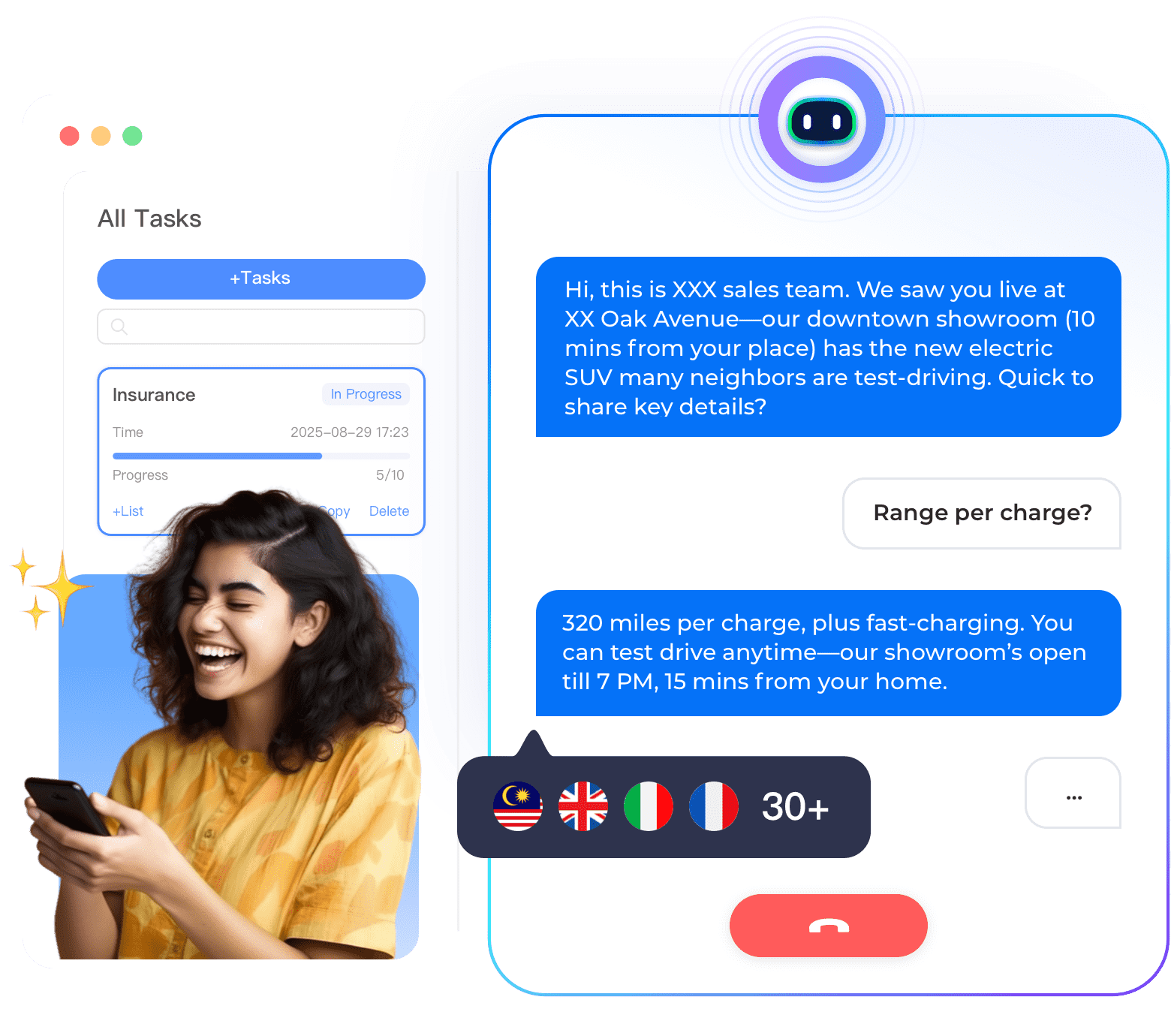
Instadesk Intelligent Voice Robot is an automated communication solution integrating Automatic Speech Recognition (ASR), Text-to-Speech (TTS), Natural Language Processing (NLP), and large language model (LLM) algorithms. Its core strength lies in simulating human-to-human interactions to handle end-to-end voice workflows—including inbound inquiries, outbound outreach, intent recognition, and transaction processing—while enabling seamless data accumulation and intelligent analysis. Unlike traditional IVR’s "button-based mechanical responses," Instadesk’s 2026 flagship model features "long-context conversation, emotion detection, and autonomous decision-making" capabilities, allowing it to tackle complex business scenarios and serve as a true "high-efficiency partner" for human agents.
2. Core Technical Components: Four Modules Powering Human-Like Interactions
Automatic Speech Recognition (ASR): Converts customer voice to text. A critical metric is recognition accuracy—top-tier 2026 solutions achieve over 90% accuracy in Chinese, supporting dialects, ambiguous expressions, and background noise.
Natural Language Processing (NLP): The "brain" of the system, responsible for parsing customer intent and managing multi-turn conversation logic. Instadesk’s advanced NLP supports 12+ rounds of long-context interactions, detects 7 types of customer emotions, and dynamically switches to empathetic scripts.
Text-to-Speech (TTS): Transforms text into voice, with naturalness and personalization as key differentiators. Instadesk offers 100+ customizable voices, including "brand-exclusive voice options" that reduce customer resistance by 40%.
LLM & Business Integration Layer: The game-changing 2026 upgrade. Instadesk leverages LLMs to optimize script strategies and intent understanding, while seamlessly integrating with CRM systems, ticketing platforms, and other business tools. This creates a unified "call-data-operation" workflow, eliminating data silos.

3. Core Value: Three Leaps from Cost Reduction to Growth
The value of deploying Instadesk Intelligent Voice Robot extends beyond mere cost-cutting to driving efficiency and revenue growth:
Cost & Efficiency Gains: 1 Instadesk robot handles 1,200+ outbound calls daily—equivalent to 3-5 human agents. It automatically filters 90% of invalid numbers (e.g., disconnected lines, refusals), slashing marketing costs by 50% for one automotive client.
Precision Outreach: Targeted outbound campaigns based on customer tags and profiles. A leading bank used Instadesk to engage long-tail customers, boosting effective reach to 80% and reducing marketing waste by 70%.
Compliance & Risk Control: End-to-end call recording, sensitive information redaction, and script compliance checks. After deploying Instadesk, a financial institution’s outbound compliance rate rose from 80% to 99%, achieving zero regulatory penalties.
4. Key Use Cases: Covering Cross-Industry Core Needs
Industry-specific adaptability is critical for selection. Instadesk’s 2026 use cases span four core categories:
Outbound Marketing/Lead Management: Lead cleansing (automotive), course invitations (education), and financial product promotions. A top education provider increased lead screening efficiency by 4x with Instadesk.
Customer Service/Follow-Ups: E-commerce sale notifications, post-medical follow-ups, and logistics updates. A hospital achieved 100% follow-up coverage and reduced human agent workload by 50%.
Compliance Notifications/Government Services: Credit card bill reminders, fraud s, and policy advocacy. A public security anti-fraud center used Instadesk to reach high-risk groups, achieving 100% data security audit compliance.
Complex Business Consultations: Financial product inquiries, broadband installation guidance, and e-commerce return support—powered by multi-turn conversation capabilities and industry-specific knowledge bases.
II. 2026 Scientific Selection Framework for Instadesk Intelligent Voice Robot: 5 Core Dimensions + Practical Metrics
The key to selection is "business alignment," not chasing technical specs. Based on 2026 industry trends and leading cases, evaluate solutions across five quantifiable dimensions:
1. Technical Performance: Focus on Core Metrics, Reject Hype
Prioritize real-world interaction capabilities over empty claims:
Intent Recognition Accuracy: ≥90% in complex scenarios. Prefer vendors with proprietary LLMs to avoid compatibility risks from third-party technologies.
Conversation Capabilities: Support for ≥8 rounds of long-context interactions, handling interruptions and topic shifts. Emotion recognition accuracy ≥85% with dynamic empathetic script adjustments.
Response & Stability: Voice response latency ≤3 seconds, system availability ≥99.9%, and support for 10-million-level concurrency—ideal for peak periods like e-commerce sales or holiday marketing.
Iteration Capacity: Monthly feature updates and model optimization based on enterprise conversation data.
Practical Tip: Request a POC (Proof of Concept) test using your business’s real scripts and customer data to validate performance.
2. Use Case Adaptability: Align with Industry & Business Needs
Generic solutions fail to meet deep industry requirements. Focus on three key factors:
Industry-Specific Solutions: Anti-fraud s and compliance script libraries for finance; multi-language support for cross-border businesses; and customized lead activation for automotive.
System Compatibility: Seamless integration with existing CRM, ticketing, and 400 hotline systems—with ≥50 API interfaces to avoid data silos.
Customization Flexibility: Low-code/no-code platforms that let enterprises adjust scripts independently, without relying on vendor technical teams.
3. Compliance & Security: Mitigate Regulatory Risks
2026 demands strict compliance, especially in regulated industries:
Certifications: Verify vendors hold value-added telecom operation licenses and ISO/IEC 27001 certification. For finance, ensure compatibility with domestic trusted computing standards.
Data Security: Features like virtual number outbound calls, encrypted call recordings, and sensitive information redaction (e.g., phone numbers, IDs) to comply with GDPR and local data protection laws.
Compliance Controls: Automatic blacklist filtering, after-hours call restrictions, and real-time script compliance checks.
4. Service Support: Ensure Long-Term Success
Deployment success depends on vendor support:
Response Time: ≤15-minute resolution for post-sales issues and 24/7 technical support to avoid downtime during peaks.
Implementation & Training: Deployment within ≤15 days, plus script optimization and operator training to accelerate onboarding.
Case Studies & Reputation: Prioritize vendors with industry-leading clients across core business sectors.
5. Cost-Effectiveness: Calculate Total Cost of Ownership (TCO)
Look beyond upfront pricing:
Pricing Models: SMBs can choose pay-as-you-go (e.g., per call minute, outbound volume); enterprises may opt for annual subscriptions or on-premise deployment to avoid redundant costs.
Hidden Costs: Confirm no extra fees for script customization, API integration, or upgrades. Leading vendors use modular pricing with no hidden charges.
ROI Calculation: Top solutions deliver ROI within ≤12 months, measurable via "labor cost savings + conversion rate improvements."
Instadesk Intelligent Voice Robot leverages deep learning and NLP to deliver natural, business-specific scripts for automated outbound calls. Suitable for customer service, marketing, follow-ups, and notifications across industries, it’s easy to configure and deploy—empowering enterprises to transform outbound operations with intelligence.
Ready to accelerate growth with smarter outbound engagement? Explore Instadesk Intelligent Voice Robot today and unlock tangible efficiency gains and revenue growth.