Modern smart customer communication: VoiceBot integration with call center software
As customer communication becomes more complex and more scattered worldwide, many companies find that traditional call center models no longer fit current service needs. Customers expect fast responses, communicate through many different channels, and use a wide range of languages. This situation places heavy pressure on service teams. Voice interaction still plays a key role in customer support, as many issues are easier to solve through direct conversation. Relying only on human agents, however, creates long-term challenges. Labor costs increase, service quality becomes uneven, and business growth is harder to manage.
These changes have pushed enterprises to rethink how voice communication should work within the overall customer service system. Calls are no longer treated as isolated actions. More organizations now connect VoiceBot functions directly with call center software, allowing automated voice interaction and human agents to operate within the same workflow. In this model, voice becomes part of an intelligent, data-driven service system. This is the direction behind Instadesk’s VoiceBot integration approach, which helps enterprises manage voice requests more effectively while keeping service experiences consistent across regions and time zones.
If VoiceBot technology operates separately from the call center system, it is difficult to rely on VoiceBot technology itself to play its full role. In the absence of system integration, automatic calls often have no contextual information, no customer history content, and cannot cooperate with the manual agent. Instadesk chooses to put the VoiceBot function directly into the call center software, making up for the intermediate fault in this way and forming a highly connected service environment.
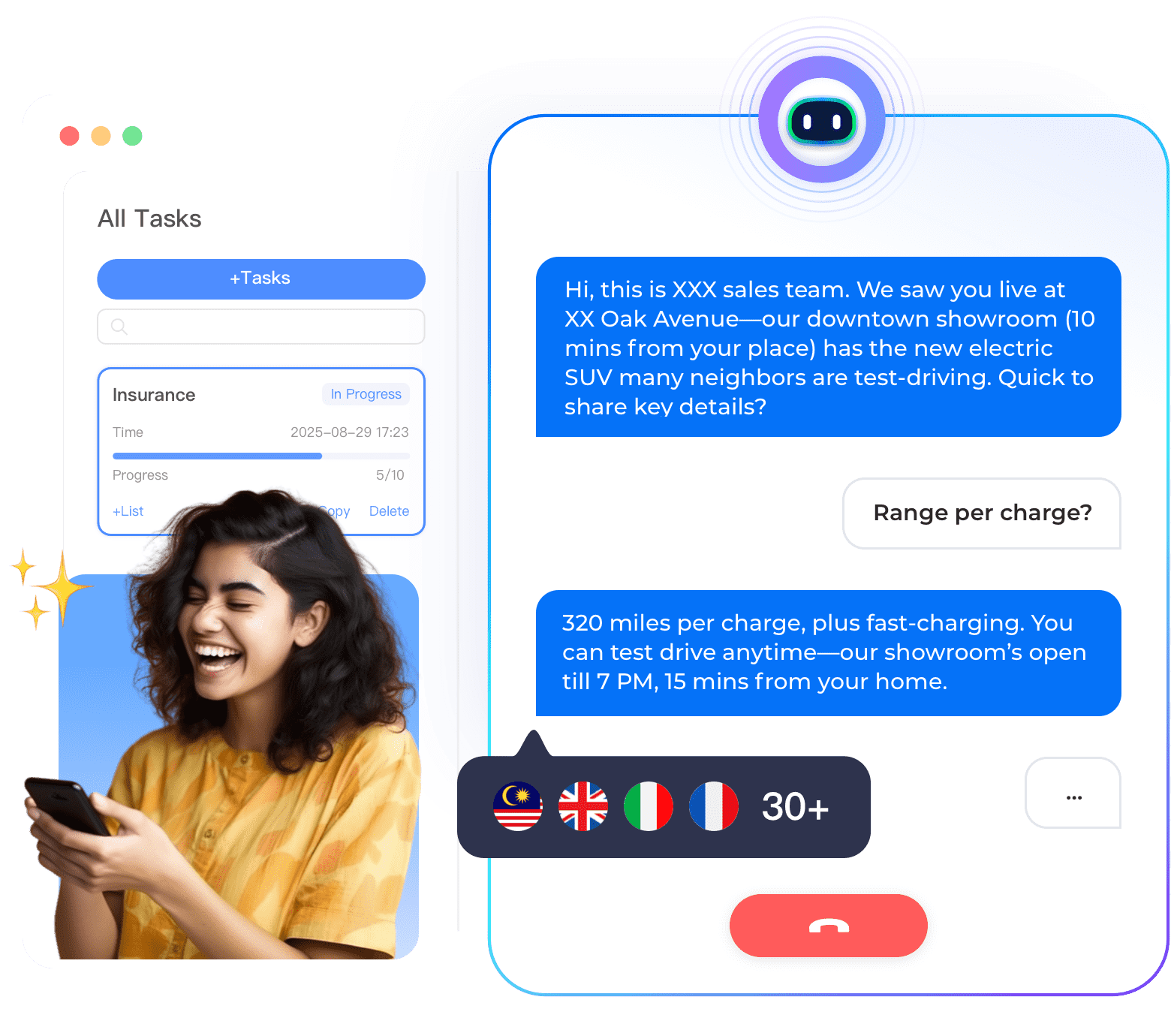
Under this integrated structure, VoiceBot is responsible for handling high-frequency and regular voice interactions, such as notifications, reminders, ations and follow-up return visits. The call center system offers a wide range of services. It can provide a unified entry point for services, view customer data and their interaction records, display the current work order status and various operational indicators for staff, and enhance their efficiency. When the content of VoiceBot judgment request is complex or involves situations that require manual judgment, the interaction process can carry complete background information and directly forward it to the online manual agent.
This integration method ensures that automation does not replace manual services, but supports manual services. VoiceBot is used to reduce repetitive work pressure and keep the overall service volume stable, while manual agents focus on more complex and valuable communication. The final formation is a more balanced and resilient voice service operation mode.
The integration of Instadesk's VoiceBot and call center software revolves around real service scenarios, not to demonstrate experimental automation capabilities. An obvious advantage of the system is the unified management of all channels. The same platform has more complex and stronger processing abilities. It can handle more different information types at the same time. The information is no longer scattered, and the agent does not need to switch the system frequently.
Relying on the language processing capabilities of artificial intelligence, the solution supports large-scale multilingual voice communication.After an enterprises installing VoiceBot, it is no longer needs to form teams that can speak multiple languages. In the case of high-frequency outbound calls or centralized calls, the real-time processing mechanism can still maintain stable operation performance. The system also has the ability of intelligent workflow management. VoiceBot's calls are not independent operations. They are associated with work orders, customer information and specific service processes. The system will automatically complete the classification and allocation, and assign the follow-up tasks to the corresponding team according to the language, time zone and service type. The service process can be continuously promoted, and the boundaries of responsibility are clearer.
Compliance management and operation control mechanisms are integrated inside the system at the same time. VoiceBot's interactive content can be executed based on preset scripts, which meet the regulatory requirements of different regions, and the sensitive content filtering function can reduce compliance risks in regulated industries. With the support of these mechanisms, enterprises can expand the scale of voice services while maintaining the necessary level of governance.
After expanding its customer base to over 100 countries, a global consumer-centered enterprise has encountered greater service pressure. Customers will use a variety of different channels to communicate problems, such as phone calls, emails, social media platforms and e-commerce messages, all of which will be integrated into the system. Voice communication is still the key way. Cross-language and cross-time zone call management puts a lot of burden on manual seating.
The company connected the VoiceBot function to the call center software through Instadesk and adjusted the voice service process. The system introduces automatic voice interaction, which is used for notification sending, handling frequently asked questions and service return visits, which significantly alleviates the pressure of inbound peaks. Voice robots and manual seats operate together in the same unified service platform. All interactive content is recorded and managed centrally. The system supports multi-language real-time processing and assigns work orders according to the customer's location and service type. The service team implements unified standards in different regions. The team completed the response within their respective working hours. Operational data shows that the overall service efficiency has been improved, and the SLA compliance rate has reached 99.2%. Voice automation reduces night service latency by 80%, enabling enterprises to provide a more stable and predictable customer experience globally.

Another organization operating in a highly regulated industry has encountered different types of challenges. The cost of manual outbound calls is relatively high, and it is difficult to expand. When implemented in different regions, manual outgoing calls are also more likely to affect various regulatory risks.
By integrating Instadesk's VoiceBot with call center software, the organization has deployed sustainable artificial intelligence outbound voice interaction capabilities. The VoiceBot system supports multi-language calls. The system has a built-in content filtering mechanism for compliance needs, which is used to control the outbound content. This mechanism is used to ensure that the content of the call meets the local regulatory requirements. The voice system has been integrated with the call center platform. All outdial interactions can be recorded, monitored and analyzed in the same system.
This mode has changed the original outbound communication mode. The outbound call process no longer relies entirely on manual operation. The overall process is reconstructed into a clearly structured automated workflow. VoiceBot is responsible for handling a large number of routine outbound tasks. The response involving complex situations is transferred to the manual seat. The complete interactive background information can be obtained when the seat takes over. The organization reported that its labor costs have been reduced by 30%. The efficiency of outbound call execution has been improved by 50%. The ability to identify intentions has been optimized. The unified rhetorical structure improves the transformation performance. The service quality remains more stable in different scenarios.
The difference between VoiceBot integration and basic voice automation is its impact on long-term operations. By putting VoiceBot into the call center software, Instadesk allows enterprises to establish a service model that can operate with business growth. The voice service capacity can be expanded without the need to increase personnel proportionally. At the peak of business, the service quality remains stable.
A unified data environment supports continuous improvement. Voice interaction will generate structured data. The team can analyze these data to adjust the content of speech, optimize the routing method, and find bottlenecks in the service process. This process can help enterprises gradually improve automated services and the interaction mode of manual participation.
The integration method can ensure that automation plays a positive role in the manual experience. The customer service staff completes the work in a simplified operation interface. This way of working reduces the burden of understanding and operation. Agents can focus on solving practical problems instead of repeatedly handling calls of the same type.
Voice communication has always been one of the most important ways in customer service. This is more obvious in the usage environment with many language types, large service scope and high communication volume. Combining VoiceBot functions with call center software can deal with these practical problems. This method is more stable when it is implemented, and it is also easier to expand the scale.
The practice of Instadesk shows that the integration goal of VoiceBot is not to replace manual seating. It focuses on the overall operation of the voice service. In the modern customer service system, voice needs to be reorganized and managed. Through a unified platform, put automation capabilities, data systems and manual experience together. Enterprises can improve the overall processing efficiency. Enterprises can also better meet compliance requirements. The service experience obtained by customers in different scenarios will be more consistent.
The business continues to be carried out in different regions. Customers' requirements for response speed and service quality are also increasing. Against this background, the importance of integrated voice solutions is constantly increasing. The integration of VoiceBot with call center software is no longer just an additional function. It is becoming an indispensable part of enterprises building a long-term customer communication system. This ability helps to form a stable and sustainable service model.
Issac
Omnichannel Digital Operations: Driving Traffic Growth & Deepening User Value
You may also like
55% to 92%: How Voicebot Fixes Car After-Sales Service
In today’s very competitive car market, after-sales follow-up is not optional—it’s a must. It keeps customers coming back, builds a good brand name, and drives repeat sales. But most car dealers face a big problem: they can’t reach enough customers, and satisfaction rates stay low.
A Practical AI Voicebot Development Company for Multilingual and High-Volume Calls
There are many companies that make voice robots, but it is easy to speak and can stabilize difficulties in complex actual combat. What everyone really cares about is not whether the robot's voice is good or not, but whether it can get out of trouble and work stably in the face of massive concurrency, multilingual mixing, and those regular business rules.
Voice Chatbots for Sales and Marketing: How Overseas Companies Drive Growth
In overseas markets, the telephone has never become outdated. On the contrary, it remains one of the most effective communication methods for closing deals. The problem is that it's too expensive to rely on human resources, there are time differences that are troublesome, and leads are scattered. That's why more and more companies are turning their attention to voice chatbots for sales and marketing, rather than just using voice robots as a customer service tool.
Get Started in Minutes. Experience the Difference.