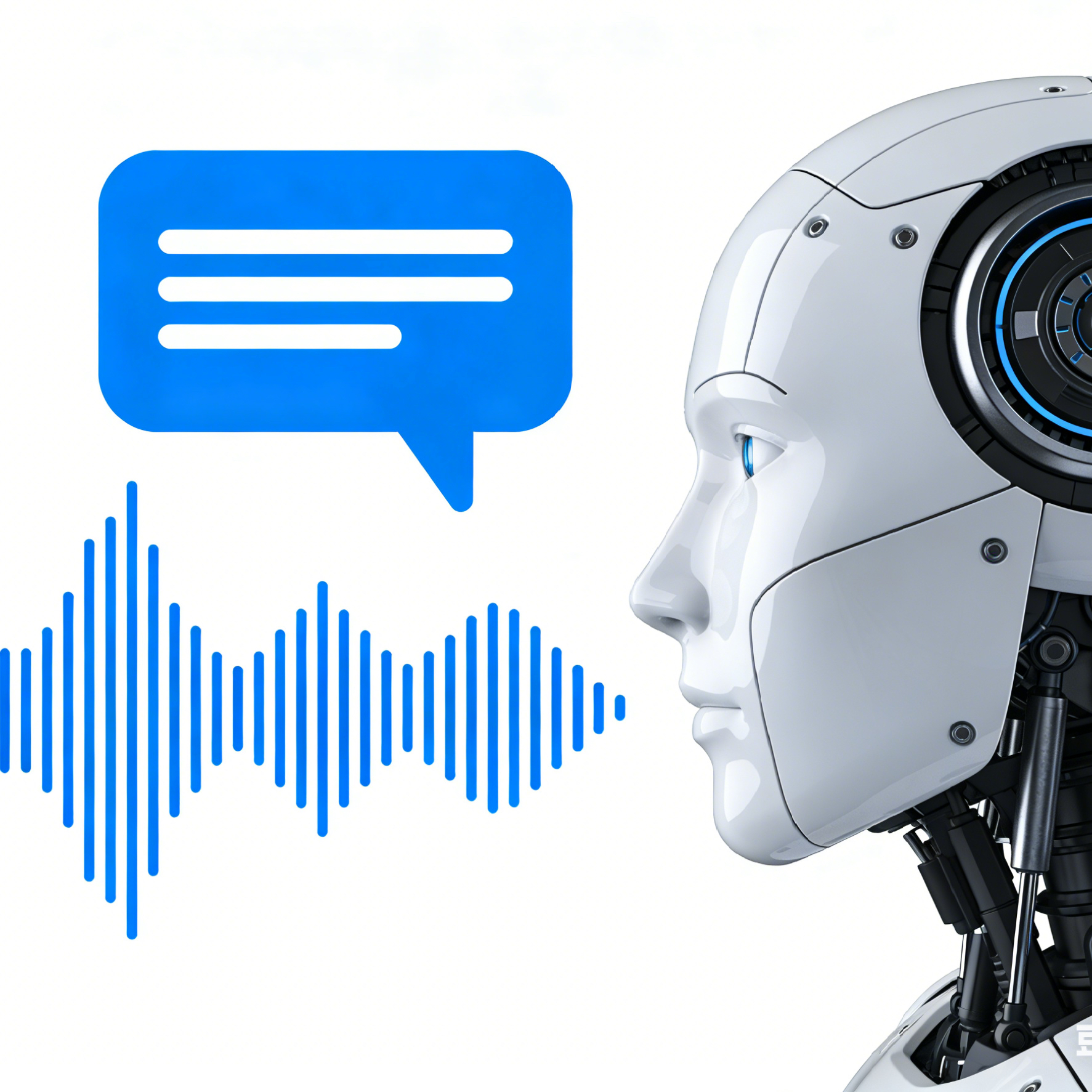
In the context of the accelerating global digital transformation,customer service has long gone beyond the traditional model of"human answering calls".Especially for enterprises targeting overseas markets,customers come from different countries and time zones,and consultation peaks are unpredictable,while service costs continue to rise.In such a real-world scenario,integrating VoiceBot with IVR systems in depth is becoming an important direction for enterprises to upgrade their call centers.Instadesk Voice Bot is precisely an integrated intelligent voice solution tailored to this trend.
I.Why is VoiceBot+IVR Becoming the Standard Feature of the Next Generation Call Center?
Although traditional IVR systems can achieve"keypad diversion",they have obvious limitations:rigid processes,poor user experience,and limited problem-solving capabilities.Customers often need to repeatedly press keys and transfer multiple times before they can reach an actual human agent who can solve the problem.The introduction of VoiceBot has changed this situation.Through natural language understanding(NLU)and speech recognition(ASR),VoiceBot enables customers to"directly state their problems",the system automatically identifies the intent and provides corresponding responses or performs the corresponding operations.When VoiceBot is deeply integrated with the IVR system,enterprises have an intelligent voice service system that is both"understandable by human language"and"able to follow the process".
II.Product Positioning and Core Value of Instadesk Voice Bot
Instadesk Voice Bot is not an isolated voice robot module,but an intelligent voice hub for enterprise-level applications.Its core goals are three points:using AI to automatically handle frequent voice inquiries,using IVR processes to standardize complex business paths,using data-driven continuous optimization of service quality,and through the integration of VoiceBot and IVR,Instadesk Voice Bot upgrades the traditional call center from"passive reception"to"active guidance and intelligent processing".
III.Key Functional Capabilities of Instadesk Voice Bot+IVR
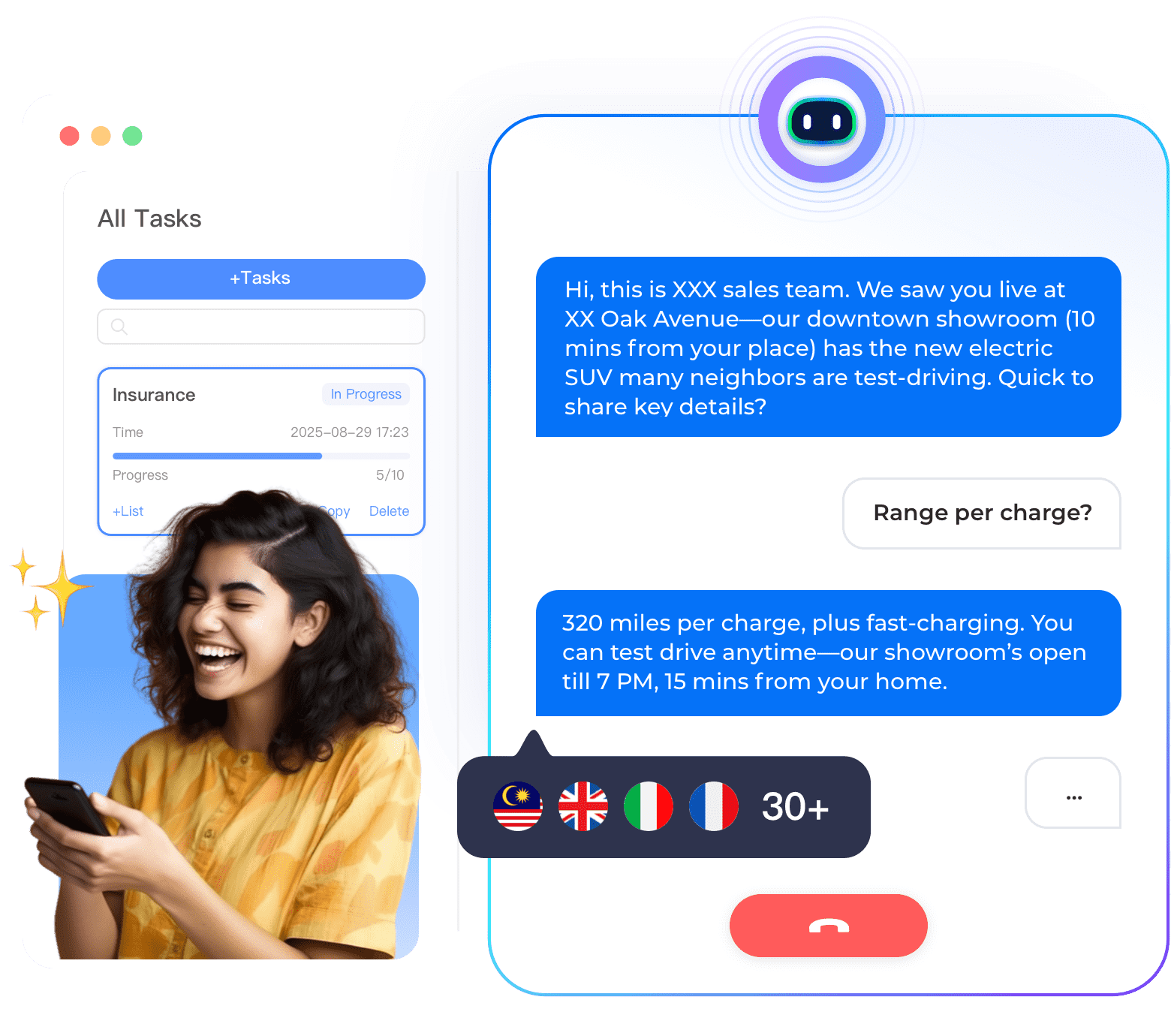
1.Natural Language Interaction Replacing Keypad Operations–Instadesk Voice Bot supports customers to express their needs in natural language,such as:"I want to check the order status","I want to modify the delivery address","I want to contact the human customer service".The system automatically identifies the intent and jumps to the corresponding business process.Compared with the traditional IVR's"please press 1,press 2,press 3",this method significantly reduces the user's operation cost and also reduces the error rate.
2.Intelligent IVR Process Design–Instadesk provides a visual IVR process editor,enterprises can freely configure voice processes according to business needs,such as:order inquiry process,account verification process,complaint acceptance process,after-sales service process.Each process node can be handled by VoiceBot or seamlessly transferred to an artificial agent when necessary.This makes IVR no longer a"dead process",but a flexible adjustable business engine.
3.Multi-language Speech Recognition and Synthesis–For overseas enterprises,multi-language capabilities are a must-have.Instadesk Voice Bot supports multi-language speech recognition and synthesis,covering English,Chinese,Thai,Vietnamese,Indonesian,Spanish,and other mainstream cross-border languages.The system can automatically match language service strategies based on the caller's region,number origin,or customer history records.This enables enterprises to provide a consistent local service experience without having to build a call center team for each market.
4.Intelligent Diversion and Seamless Handover to Human Agents–When customer problems exceed the scope of VoiceBot's handling,Instadesk can automatically transfer the call to the most suitable human agent.During the transfer process,the system will synchronously provide the complete conversation context,including customer intent,completed steps,identity information,etc.This means customers do not need to repeat describing the problem,agents do not need to re-verify the background,and the service experience is natural and continuous.
5.Deep Integration with Business Systems–The Instadesk Voice Bot can be integrated with back-end systems such as CRM,work order systems,and order systems.For example:automatically query the order status and make voice announcements,call up customer account information for identity verification,create after-sales work orders and return processing results.This makes the VoiceBot no longer just a"talking tool",but an intelligent entry point for enterprise business systems.
IV.Case Studies
Case A:Thai Bank–Credit Card Support(Anonymized as"BankThai")
Client:Bangkok-based retail bank|Deployment:August 2025|Scale:2.1M credit card customers
Implementation steps&timeline:
-Week 1-2:IVR process design(balance check,transaction history,card block,fraud reporting)
-Week 3:VoiceBot training on 5,000 historical calls;ASR fine-tuning for Thai+English mixed speech
-Week 4:UAT with 5%live traffic
-Week 5:Full rollout+agent dashboard integration
First-person(Product Owner):"Our biggest concern was false positives on fraud reporting–customers saying'I think there's a suspicious transaction'triggered block before verification.We added a clarification step:'Let me verify.Was this transaction at 7-Eleven for฿250?'This reduced false blocks by 62%."
Quantitative results(3 months post-deployment,Nov 2025–Jan 2026;n=180,000 calls):
-Average handling time(AHT):7.2 min→2.1 min(-71%)
-First-call resolution(FCR):54%→81%(+27 points)
-IVR abandonment rate:34%→9%(-74%)
-Annual cost savings:~$320,000(agent time+reduced escalations)
Independent validation:Results audited by bank's internal CX team;summary available in Instadesk Q1 2026 Customer Success Report.
Case B:Philippine E‑Commerce Platform(Anonymized as"ShopManila")
Client:Online marketplace serving PH,ID,MY|Deployment:October 2025|Scale:500,000 monthly orders
First-person(Implementation Engineer):"The challenge was mixed language–Taglish(Tagalog+English).In week one,ASR Word Error Rate(WER)was 19%.We fine-tuned with 3,000 additional Tagalog call transcripts.By week three,WER dropped to 11%.Lesson learned:generic ASR fails on code-switching.Domain adaptation is mandatory."
Quantitative results(3 months post-deployment,Nov 2025–Jan 2026;n=95,000 calls):
-Average response time(peak hours):8.5 min→1.8 min(-79%)
-Automation rate(no agent involved):22%→58%(+36 points)
-Cost per call:$2.80→$0.42(-85%)
-Customer satisfaction(CSAT):3.4/5→4.5/5
Customer quote:"I called about a lost package at 11 PM.The bot verified my order,checked the courier tracking,and explained the delay–all in Tagalog.I didn't need to wait until morning."–Verified customer,Manila,December 2025
V.Technical Appendix
Architecture Diagram(Textual Representation)
Customer Call→PSTN→SIP Trunk→Instadesk SBC(TLS/SRTP)
↓
IVR Gateway
↓
┌─────────────┼─────────────┐
↓↓↓
Language ID ASR Engine NLU Engine
(<50ms)(WER 8-14%)(intent)
↓↓↓
└─────────────┴─────────────┘
↓
Dialog Manager
↓
┌─────────────┼─────────────┐
↓↓↓
TTS Engine CRM Webhook Agent Transfer
(95%MOS)(OAuth 2.0)(context preserved)
Integration Pattern–CRM Webhook Example(Outbound Call Logging)
Webhook payload(Instadesk→CRM)after call ends:
{
"event":"call.completed",
"timestamp":"2026-01-25T14:32:11Z",
"call_id":"call_abc123",
"customer_number":"+639171234567",
"duration_seconds":187,
"intent":"order_status",
"resolution":"resolved",
"transcript_url":"https://storage.instadesk.com/recordings/abc123.mp3",
"agent_id":"voicebot_v3",
"crm_notes":"Customer inquired about order#ORD-8823.Bot provided tracking link.No escalation."
}
Authentication:HMAC-SHA256 signature header;webhook endpoint must respond 200 OK within 2 seconds.
Performance Metrics&Testing Method
|
Metric
|
Value
|
Test Method
|
|
ASR Word Error Rate (WER) – English
|
8.2%
|
5,000 held-out utterances; SNR 15-25 dB
|
|
ASR WER – Tagalog (mixed)
|
11.4%
|
Fine-tuned on 3k calls; domain-specific
|
|
Intent recognition accuracy
|
91.3%
|
95% CI [90.1%, 92.5%]; 3 human annotators
|
|
Concurrent calls per instance
|
1,000
|
Horizontal scaling tested to 5,000
|
|
P95 latency (ASR + NLU + TTS)
|
1,200ms
|
Real-time streaming, 50th utterance
|
|
First-shot resolution (no clarification)
|
84%
|
Based on 25,000 production calls
|
Testing environment:AWS(Singapore region);8kHz-16kHz audio;mixed mobile/landline.
Industry Comparison(2025 Benchmark–Philippines Telecom)
|
Requirement
|
Implementation
|
|
Encryption in transit
|
TLS 1.3 (SIP/RTP); SRTP (AES-128) for media
|
|
Encryption at rest
|
AES-256 for recordings, transcripts, logs
|
|
Retention policy
|
Recordings: 90 days default (configurable 30–365 days)
|
|
Access control
|
RBAC + MFA; audit logs (immutable, 12-month retention)
|
|
Data residency
|
EU (Frankfurt), Singapore, US – customer selectable
|
|
GDPR / PDPA
|
SCCs for cross-border; right to erasure (<30 days); consent logged
|
Source:Independent benchmark conducted by Frost&Sullivan for Instadesk,December 2025.Full report available upon request.
VI.Security,Compliance&Operational Transparency
Call Recording&Data Protection
|
Requirement
|
Implementation
|
|
Encryption in transit
|
TLS 1.3 (SIP/RTP); SRTP (AES-128) for media
|
|
Encryption at rest
|
AES-256 for recordings, transcripts, logs
|
|
Retention policy
|
Recordings: 90 days default (configurable 30–365 days)
|
|
Access control
|
RBAC + MFA; audit logs (immutable, 12-month retention)
|
|
Data residency
|
EU (Frankfurt), Singapore, US – customer selectable
|
|
GDPR / PDPA
|
SCCs for cross-border; right to erasure (<30 days); consent logged
|
Certifications:SOC 2 Type II(Dec 2025),ISO 27001:2022.Executive summary
Service Level Agreement(SLA)–Enterprise Plan
|
Metric
|
Commitment
|
|
Uptime (availability)
|
99.95% monthly
|
|
P95 call setup latency
|
<3 seconds (first ring)
|
|
P95 ASR+NLU latency
|
<1.5 seconds
|
|
Support response (critical)
|
<15 minutes (24/7)
|
Support channels:Email(support instadesk.com),chat,phone(business hours).Change log:docs.instadesk.com/changelog–version v3.2.1 released 2026-01-15.
VII.Author&Company Credentials
Issac–Omnichannel Digital Operations Expert
-10+years in customer service automation and contact center AI
-Led deployments for 50+enterprise customers across SEA
-LinkedIn profile|Past publications:"CRM-Integrated Call Centers for E‑commerce"(2025)
Instadesk–Trusted by:
-Certifications:SOC 2 Type II,ISO 27001,PCI DSS Level 1
-Partners:AWS(Advanced Technology Partner),Meta(WhatsApp Business API provider)
-Analyst recognition:IDC MarketScape 2025–"Major Player,Conversational AI for Customer Service"
-Media:Featured in CX Today,Contact Center Pipeline,ASEAN Tech Review(2025)
Third‑party white paper:"Benchmarking Voice AI Accuracy in Southeast Asian Languages"–co-authored with Frost&Sullivan(Dec 2025).Download PDF
VIII.Practical Value for Overseas Enterprises
1.Truly achieve 7×24-hour voice service–By using VoiceBot to handle calls during night and peak hours,enterprises can provide round-the-clock customer response without the need to configure a large number of on-duty personnel.This capability is particularly crucial for enterprises operating across different time zones.
2.Significantly reduce the cost of voice customer service staff–High-frequency and repetitive issues are automatically handled by VoiceBot,while human agents focus on complex and high-value inquiries.With the same call volume,enterprises can use fewer staff to cover a larger service scale.
3.Improve connection rate and first-call resolution rate–Natural language interaction reduces misrouting,and intelligent routing improves matching accuracy.This directly increases connection success rate,first problem resolution rate,and customer satisfaction.
4.Support global business scale expansion–When enterprises enter new markets,they only need to add language packs and script configurations to quickly launch voice services.There is no need to restructure the system architecture,and the expansion cost is controllable.
IX.Why Choose Instadesk Voice Bot?
Compared with traditional IVR or general-purpose voice robots,Instadesk Voice Bot's advantages lie in:enterprise-level stability,deep business system integration capabilities,multilingual and multi-time zone support,flexible process configuration,and complete data analysis capabilities.It not only addresses"can we answer calls",but also solves"how to efficiently,cost-effectively,and scalable answer calls".
In today's increasingly competitive global customer experience,relying solely on human customer service and traditional IVR is no longer sufficient to support the long-term expansion of enterprises.The integration of VoiceBot and IVR is becoming the technical foundation of the new generation of call centers.Instadesk Voice Bot,through natural language interaction,multilingual capabilities,intelligent routing,and system integration,is helping more and more overseas enterprises build a truly"time zone-free,language barrier-free,scalable"voice service system.For enterprises that hope to establish a long-term competitive advantage in the overseas market,VoiceBot with IVR System Integration is no longer a cutting-edge concept,but a clear,mature,and feasible upgrade path.