When teams search for Guide to VoiceBot: What is it? Functions and Brand Recommendations, they are usually not looking for a definition alone. They want to understand how VoiceBot
actually works in real customer service operations, how it connects with tickets and workflows, and whether it can handle multilingual, high-volume conversations across different countries. This guide looks at VoiceBot from a practical angle, explains its core functions, and shows how Instadesk VoiceBot has been used by global brands operating in markets such as Malaysia, Thailand, Indonesia, Vietnam, Singapore, and beyond.

What a VoiceBot Really Means in Modern Service Operations
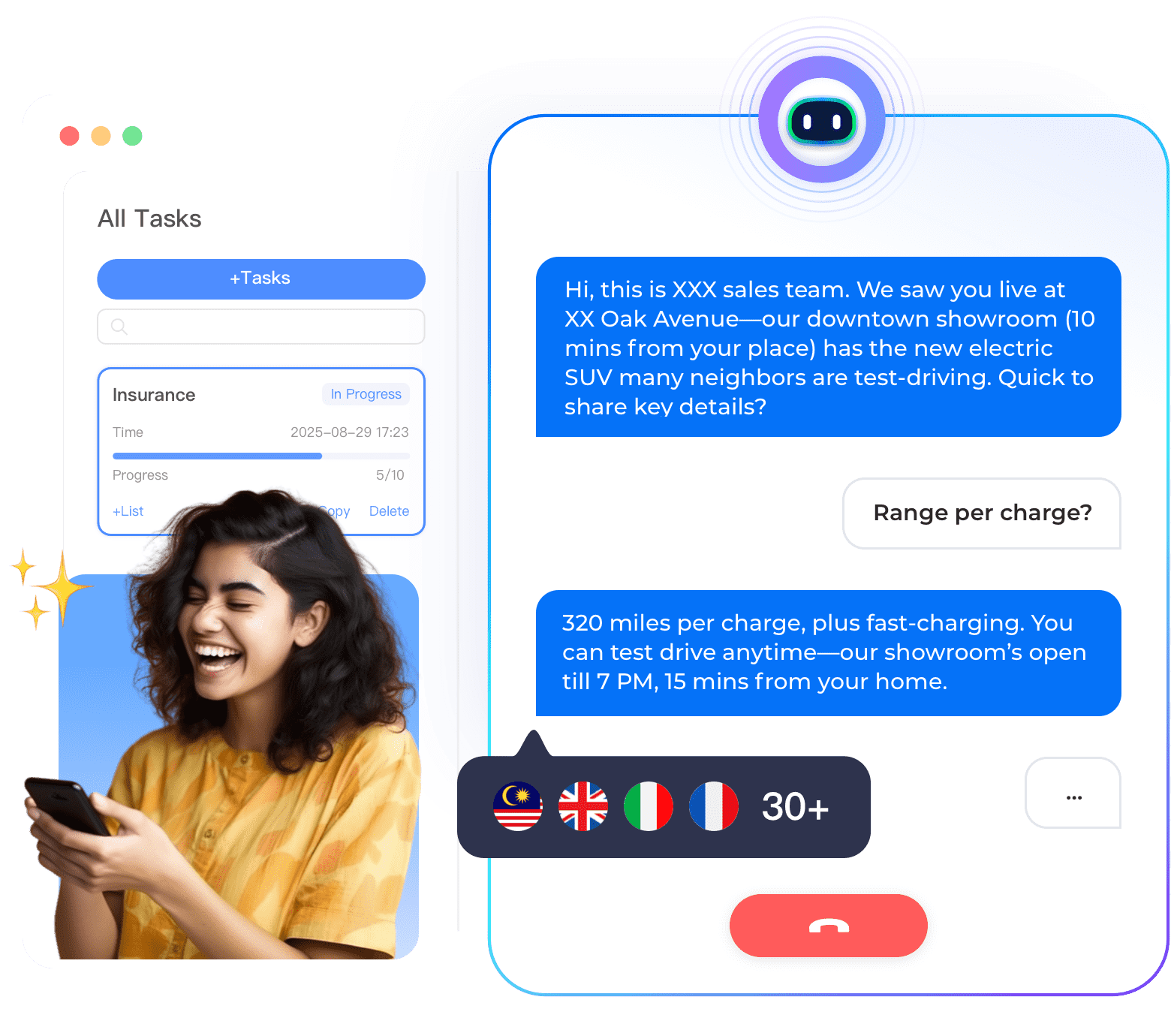
In today’s service environment, a VoiceBot is no longer just an automated phone responder. In real operations, it functions as a front-line system that listens, understands, routes, and records customer conversations, while working closely with ticket systems and human agents.
For companies serving users across multiple countries, voice is still one of the most trusted channels. Customers expect fast answers, clear language, and smooth handover when issues become complex. A practical VoiceBot must therefore do more than “talk.” It needs to understand intent, trigger tickets, connect to knowledge bases, and hand over context to agents without losing information.
Instadesk approaches VoiceBot as part of an integrated service workflow. Voice interactions are treated as structured service events rather than isolated calls. Each call can automatically generate or update a ticket, link customer history, and enter a unified service pipeline. This makes VoiceBot usable not only for basic inquiries, but also for real operational workloads.
Core Functions That Define a Practical VoiceBot
A VoiceBot used in real-world customer service must support several foundational functions. These are not optional features, but requirements shaped by daily operations.
Intelligent Call Handling and Intent Recognition
Instadesk VoiceBot uses speech recognition and natural language understanding to identify why customers are calling. Whether the request is about product usage, order status, account issues, or service notifications, the system classifies intent early in the conversation. This allows the VoiceBot to either respond directly or route the request accurately.
Ticket Creation and Routing
Voice interactions are closely linked with ticket workflows. Calls can automatically generate tickets, assign categories, and route them to the correct teams based on language, region, or business type. This reduces manual follow-up and prevents issues from being lost after the call ends.
Multilingual Communication at Scale
Serving international markets means handling multiple languages every day. Instadesk VoiceBot supports real-time multilingual interactions and works alongside translation capabilities, allowing teams to respond consistently across regions such as Malaysia, Indonesia, Thailand, Vietnam, and Singapore. This significantly reduces dependence on large multilingual agent teams.

Time-Zone Aware Service Coverage
VoiceBot workflows can align ticket routing with customer time zones. Calls received outside local working hours can be handled by automation or redirected to teams in nearby time zones, improving response speed without expanding night-shift staffing.
How Instadesk Builds VoiceBot into a Unified Service Platform
Unlike standalone voice tools, Instadesk integrates VoiceBot into a broader customer service platform. Voice calls, tickets, chat, email, and social channels all flow into a unified workspace.
Agents see call records, transcripts, customer profiles, and ticket history in one interface. Knowledge bases and internal systems can be accessed during or after calls, reducing system switching and manual errors. This setup allows VoiceBot to support agents rather than replace them, creating a balanced human–machine collaboration model.
For teams operating across several countries, this unified structure helps maintain consistent service standards, even when volumes and languages vary widely.
Real-World Applications: VoiceBot in Global Service Scenarios
Reducing Cross-Time-Zone Service Delays
Zeelool, a global online eyewear brand serving customers in over 180 countries, needed to handle high inquiry volumes and time-zone differences. Instadesk VoiceBot was used to manage notifications, outbound calls, and repetitive inquiries, especially during peak and nighttime hours.
By combining VoiceBot with ticket workflows and text bots, Zeelool reduced nighttime service delays by 80% and increased overall service efficiency by 50%. The company expanded its service coverage from 10 countries to 193 countries, without proportional growth in agent headcount.
Alibaba International: Scaling Multilingual Outbound Communication
Alibaba International uses VoiceBot to support large-scale outbound communication across multiple countries. The system handles multilingual calls in languages such as English, Vietnamese, Korean, and Indonesian, and supports high call concurrency.
Outbound volume grew from 3,000 calls per day to 80,000, with further expansion planned for markets including Malaysia, the Philippines, India, and Bangladesh. VoiceBot helped reduce labor costs by over 70%, while maintaining stable conversion output and accurate voicemail detection.
Lima Global Insurance: VoiceBot for Compliance and Efficiency
For Lima Global Insurance, serving financial customers across different regulatory environments required strict compliance and multilingual accuracy. Instadesk VoiceBot supported compliant outbound calls, sensitive word filtering, and intent recognition for insurance-related inquiries.
The system enabled 24/7 multilingual service, reduced labor costs by 30%, increased outreach efficiency by 50%, and improved sign-up rates by 20%+, while maintaining compliance with local regulations.
Why VoiceBot Matters for Southeast Asian Markets
In countries such as Malaysia, Thailand, Indonesia, Vietnam, and Singapore, voice remains a critical service channel. Many customers prefer calling for urgent issues, ations, or complex explanations. At the same time, businesses must manage language diversity, cost control, and service consistency.
Instadesk VoiceBot is designed for these realities. It supports multilingual communication, integrates directly with ticket systems, and scales without disrupting existing service teams. This makes it suitable for both fast-growing regional companies and global brands operating local markets.
Choosing a VoiceBot Brand That Fits Real Operations
When evaluating VoiceBot solutions, teams should look beyond surface-level automation. The key questions are whether the system integrates with tickets, supports multilingual workflows, handles real traffic peaks, and improves measurable service outcomes.
Instadesk’s approach focuses on operational stability, system integration, and practical results. The use cases above show how VoiceBot can reduce delays, lower costs, and support expansion across countries without sacrificing service quality.

VoiceBot as Part of a Sustainable Service Architecture
A VoiceBot is no longer just a voice interface. In modern service operations, it is part of a larger system that connects calls, tickets, agents, and data into one workflow. Instadesk VoiceBot demonstrates how voice automation can work at scale, across languages and regions, while remaining grounded in real operational needs.
For teams building or upgrading customer service in international markets, understanding VoiceBot in this practical way is the first step toward sustainable, scalable service operations.