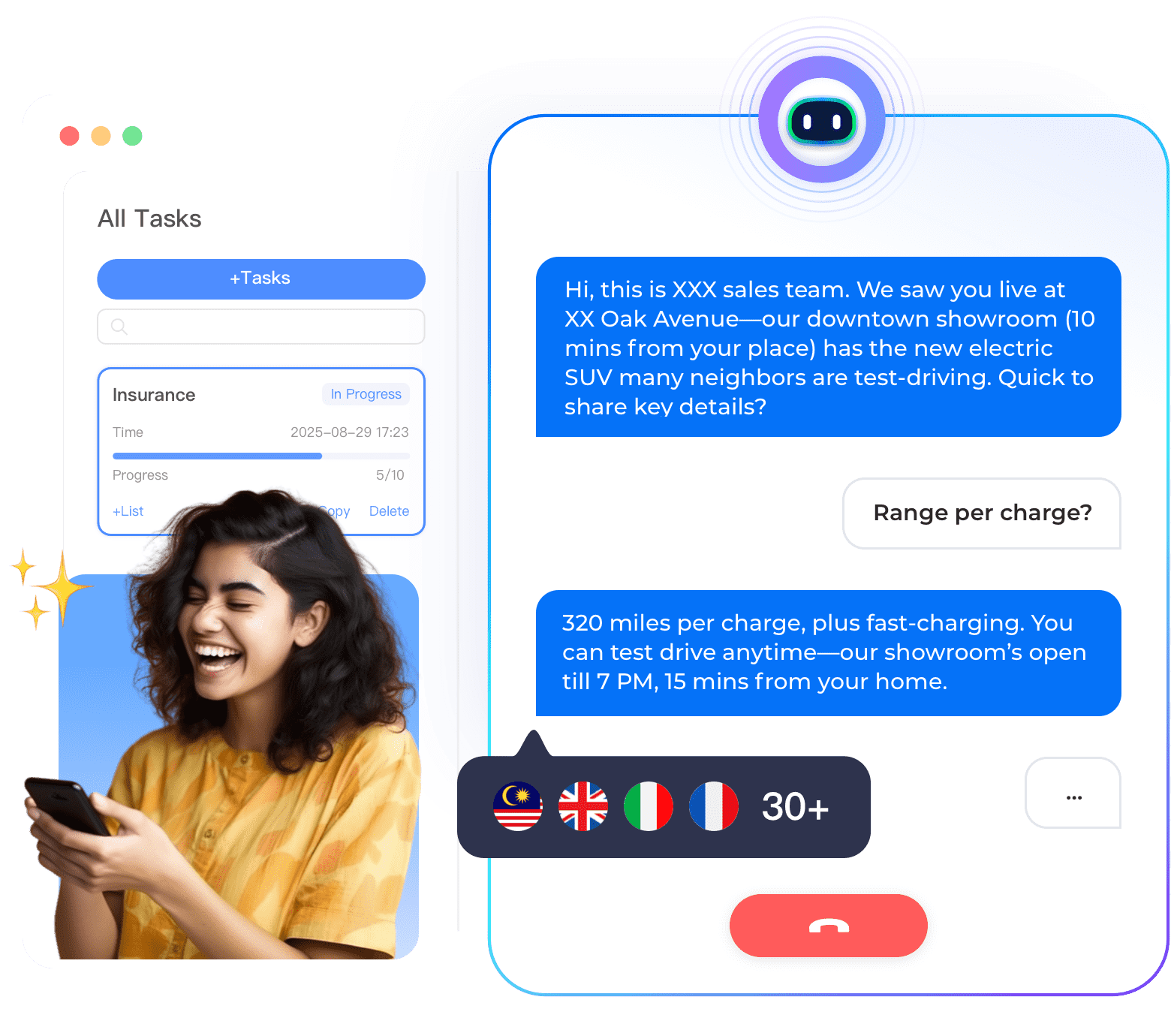
For years,businesses viewed outbound calls as a numbers game.The strategy was simple:hire more agents,buy more lists,and dial faster.But rising labor costs,high agent turnover,and the sheer monotony of repetitive calls have made this model unsustainable.
Then came the first generation of voicebots.They could deliver simple scripts,but they sounded robotic.They couldn't handle interruptions.Customers hung up frustrated,and the promised efficiency gains never materialized.
But voice technology has fundamentally changed.The new generation of voicebots doesn't just read scripts;they reason.They listen,adapt,and respond with the nuance of a human—operating at a scale no human team could match.The question is no longer whether to use a voicebot,but how to deploy one that truly represents your brand.

The Voicebot Evolution:From Scripted to Intelligent
Early automated calls were rigid.Deviate from the script,and the system failed.Today's AI voicebot is different.Powered by large language models,these systems don't just recognize words;they understand intent.
A modern voicebot ai must handle the complexity of real conversation:
•Understand intent dynamically,even when customers phrase things unexpectedly.
•Retrieve and validate data in real-time from your business systems.
•Manage interruptions naturally,responding within seconds when a customer cuts in.
•Execute multi-step workflows—like qualifying a lead,scheduling a follow-up,or processing a request—all in one call.
When a voicebot fails at these tasks,it's not a technology failure.It's a customer experience failure.And in the competitive landscape of the call center,that's a risk no business can afford.
The Hidden Cost of Shallow Voicebots
Many businesses have experimented with basic voice automation,only to find the results disappointing.Connection rates remain low.Customer satisfaction drops.The voicebot becomes a bottleneck rather than a solution.
Why?Because shallow voicebots can't adapt.They lack the emotional intelligence to read a customer's mood or the flexibility to pivot when a conversation goes off-script.They create a fractured experience where customers feel unheard—defeating the purpose of the call entirely.
The true cost isn't just the failed call.It's the lost lead,the frustrated customer who churns,and the wasted opportunity to build a relationship.
What Sets a High-Performance Voicebot Apart
The most effective voicebots today share a common architecture:they are built on large-model technology that enables genuine conversation.
This isn't about branching logic trees;it's about fluid,human-like interaction.
With Instadesk's large-model voicebot,businesses gain capabilities that were once only possible with top-tier human agents:
•Bilingual Mastery: Deeply adapted to local communication habits,the voicebot provides natural conversation recognition in multiple languages(e.g.,Malay and English).This cultural fluency helps industries like finance and technology increase conversion rates by over 30%in marketing and invitation scenarios.
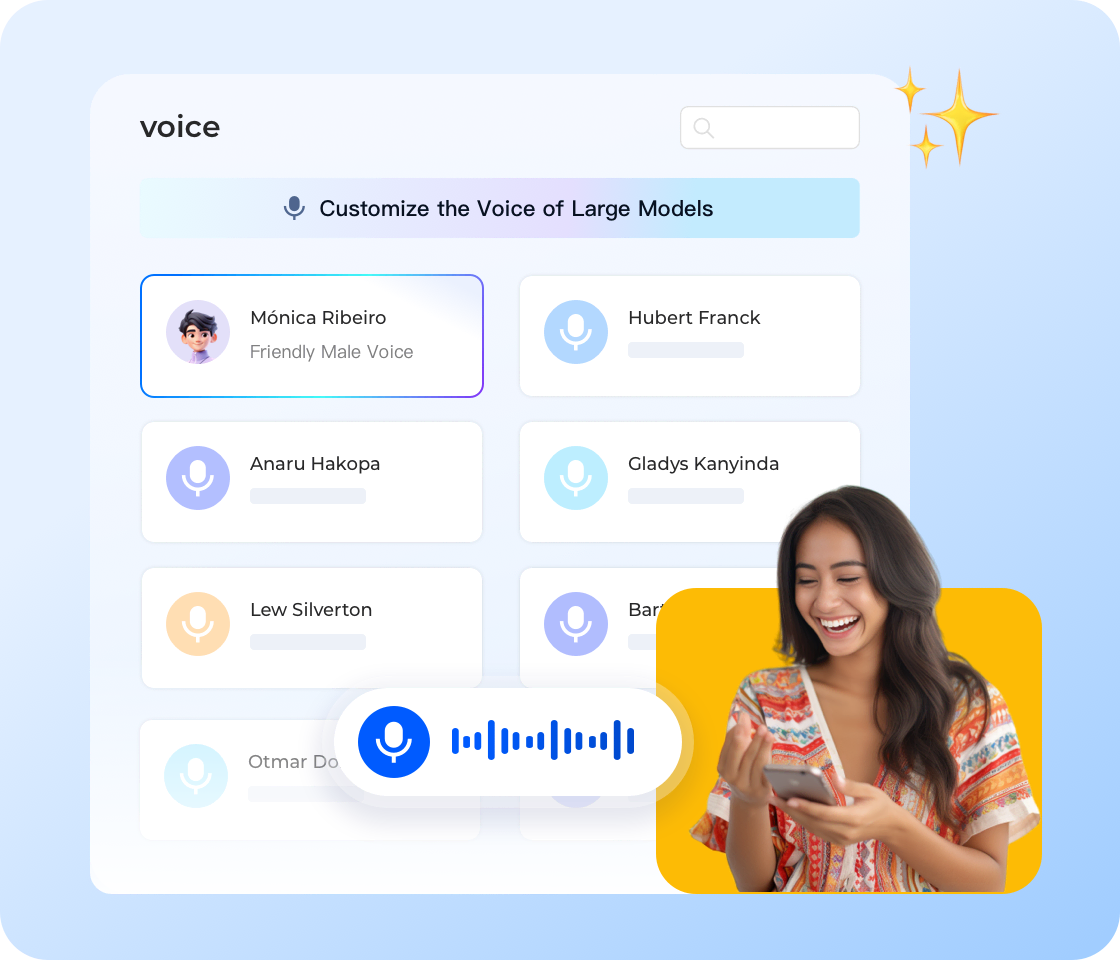
•Emotionally Intelligent Responses: The system assesses customer emotional state in real-time and intelligently adjusts the conversation content.By infusing voices with emotional elements,interactions feel genuine,keeping customers engaged longer and increasing call duration.
•Zero-Code Agility: Business teams can build a voicebot in a single day using intuitive,drag-and-visual orchestration tools.Iterations are 3X faster than traditional development,allowing businesses to respond to market changes instantly.
•Intelligent Interruption Handling: The system responds to interruptions within 2 seconds,creating a truly real-life interaction that feels natural rather than scripted.

The New Benchmark: Complex Resolution at Scale
The true test of an AI voicebot isn't answering"What are your hours?"It's handling the complex,high-stakes interactions that drive business value.
Consider a financial services firm launching a marketing campaign.A basic bot might deliver a script and mark the call as"completed."An intelligent voicebot,however:
1.Authenticates the customer.
2.Identifies interest in a specific product based on conversational cues.
3.Answers detailed questions about rates and terms.
4.Assesses the customer's engagement level and emotional state.
5.Qualifies the lead and automatically schedules a follow-up with a human agent—passing full context so the customer never repeats themselves.
This is where the voicebot benefits become tangible.
Building the Voicebot That Grows With You
Deploying a voicebot isn't a one-time project;it's a continuous optimization process.The best platforms are designed to evolve.
Instadesk's zero-code deployment means you can launch in under an hour and refine continuously.The system automatically tags conversation content,diagnoses abnormal interactions,and extracts core customer intelligence.When scripts need updating,natural language commands make changes instantly—reducing optimization costs by 70%.
And with enterprise-grade security,including data desensitization,call encryption,and private deployment options,businesses can scale confidently without compliance concerns.
The Takeaway: Your Voicebot Should Sound Like You
Customers don't think in channels.They think in problems they want solved.When they answer a call,they expect a conversation,not an interrogation.
The future of the call center won't be defined by how many calls you make.It will be defined by how many meaningful conversations you have.With Instadesk's large-model voicebot,powered by emotionally intelligent AI and seamless business system integration,you're not just automating calls.You're extending the very best of your human team—at 10 times the scale.
And finally,make every outbound call count.