You’ve deployed a voicebot to handle customer calls. It answers 24/7, never gets tired, and costs a fraction of a human agent. Yet customers still hang up. They switch to “press 0 for a human” or, worse, abandon your brand entirely.
The problem isn’t that voicebots are bad. It’s that many are built with flaws that frustrate customers within seconds. According to recent research, 55% of users say having to repeat themselves is their biggest frustration with voice AI .
The good news? These problems are fixable. Here are four common reasons customers hang up—and exactly how to fix each one.

Reason 1: The Voicebot Can’t Handle Interruptions
What happens: A customer starts speaking, but the bot keeps talking. The customer interrupts with a correction, but the bot ignores it and continues its script. The customer feels unheard and hangs up.
Why it’s common: Traditional voicebots use half-duplex communication—they either listen or speak, never both. This is fine for simple IVR menus, but fails miserably in natural conversation. In real life, people interrupt, clarify, and redirect constantly. A bot that can’t handle this feels robotic and disrespectful.
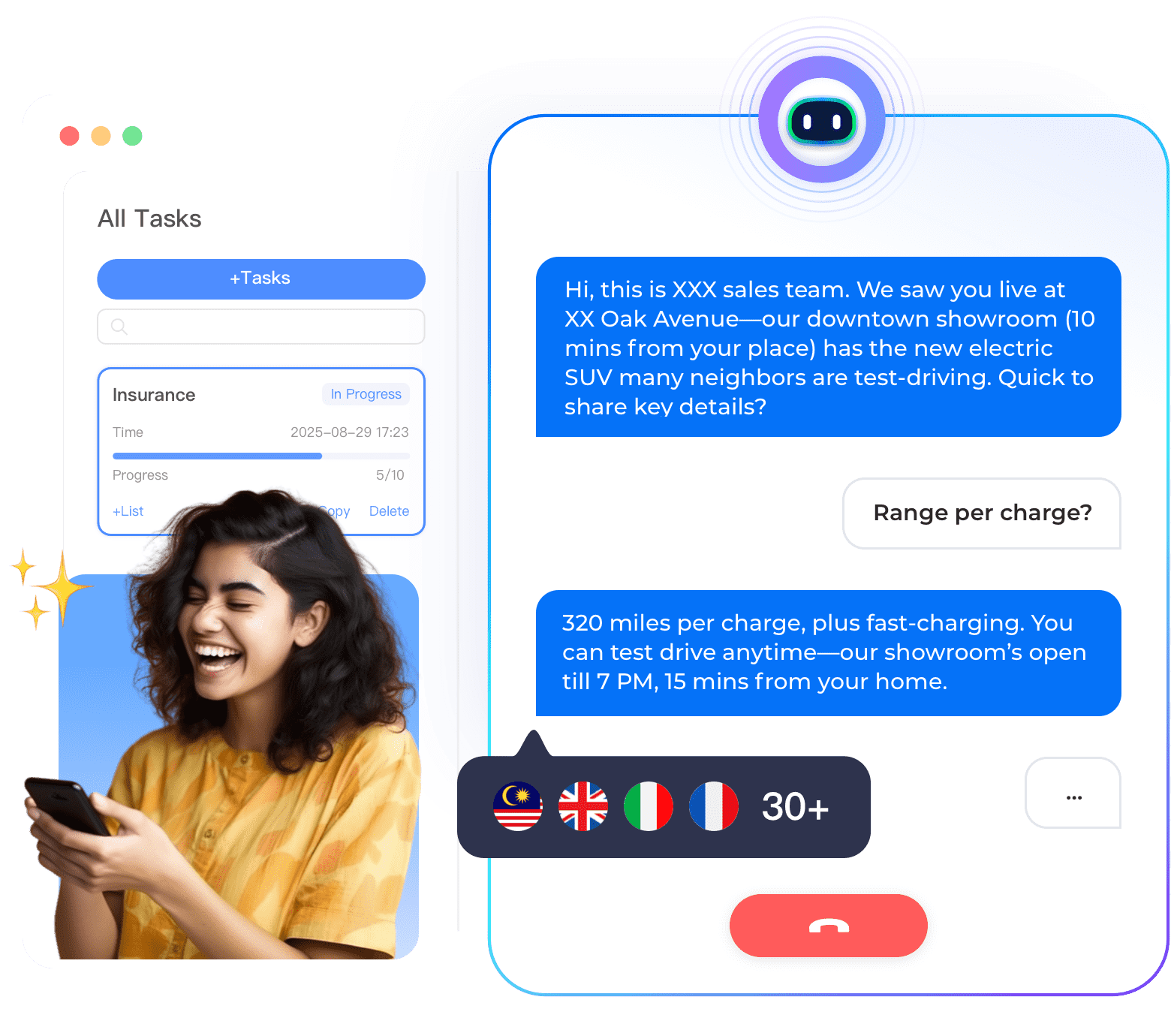
How to fix it: Look for full-duplex voice AI that can listen and speak simultaneously. The system should detect when a customer speaks during playback, stop immediately, process the new input, and adjust its response—all in under 2 seconds. This creates a fluid, natural interaction where customers feel heard.
Reason 2: The Voicebot Sounds Like a Machine
What happens: The voice is flat, monotone, and obviously synthetic. Customers can tell within the first few words that they’re talking to a robot. Engagement drops. Call duration shortens. Customers rush to end the call.
Why it’s common: Many voicebots use generic text-to-speech engines with no emotional variation. They pronounce words correctly but convey no warmth, urgency, or empathy. In a world where 71% of customers expect personalized experiences, a robotic voice feels impersonal and untrustworthy.
How to fix it: Use emotion-infused voice technology that mimics human tone, pitch, and pacing. The best systems allow you to upload real voice recordings to clone a specific brand voice, and then inject appropriate emotions—friendly for sales calls, empathetic for support, urgent for reminders.
Data shows that emotion-infused voice increases call duration and customer satisfaction. In marketing scenarios, customers stay engaged longer, leading to conversion rates up to 40% higher than traditional voicebots .
Reason 3: The Voicebot Can’t Understand Mixed Languages
What happens: A customer in Southeast Asia says, “I want to check my order, tetapi saya lupa nombor tracking” (English mixed with Malay). The bot fails to understand, asks the customer to repeat, or worse, redirects to an English-only menu. The customer feels excluded and hangs up.
Why it’s common: Most voicebots are trained on single-language datasets. They can handle English or Spanish, but not both in the same sentence. Yet code-switching—mixing languages mid-conversation—is the default communication style in many global markets, from Malaysia and Singapore to India and the Middle East.
How to fix it: Choose a voicebot with native multilingual understanding, not just translation. The system should be trained on real code-switching data, recognizing that “check order” and “lupa nombor” belong to the same intent. Leading platforms support 30+ languages with code-switching capabilities, adapting to local communication habits.
Reason 4: The Voicebot Can’t Access Customer Data
What happens: A returning customer asks, “What’s the status of my order from last week?” The voicebot responds, “I’m sorry, I don’t have that information. Please log into your account.” The customer already gave their account number, but the bot can’t pull the order. Frustration sets in. They hang up and never call back.
Why it’s common: Many voicebots operate as standalone systems, disconnected from CRM, ERP, and order management platforms. They can answer generic FAQs but can’t retrieve specific customer data, check order status, or initiate actions like returns or refunds. Customers are forced to repeat information or switch channels.
How to fix it: Deploy a voicebot that integrates deeply with your business systems. When a customer calls, the bot should automatically identify them (via phone number or voiceprint), pull their recent orders, and answer specific questions in real time. The best systems also trigger actions—generating return labels, updating payment methods, or scheduling appointments—without human intervention.
Deep CRM integration also improves lead management. Voicebots can automatically create sales leads from qualified calls, sync them to your CRM, and notify sales teams via messaging apps. This closes the loop from call to conversion.
Start Fixing Your Voicebot Today
The four problems above share a common root: voicebots designed as isolated, script-following machines rather than intelligent conversational agents. Fixing them requires a platform built on modern large language models, with native support for full-duplex conversation, emotion-infused voice, code-switching, and deep system integration.
Platforms like Instadesk VoiceBot address all four issues out of the box. With zero-code visual orchestration, pre-built industry templates, and deployment in days, they’ve helped companies reach 500,000+ members in a single campaign—achieving 13× efficiency over manual efforts and connection rates 125% above industry average.
Customers don’t hang up because they dislike voice technology. They hang up because voicebots fail to meet basic expectations: listening when interrupted, sounding human, understanding mixed languages, and accessing their data. Fix these four issues, and your voicebot stops being a frustration and starts becoming your best channel for customer engagement.