Must-Have Features in a Modern Ticketing System: Beyond just tracking tickets
Must-Have Features in a Modern Ticketing System: Beyond just tracking tickets is no longer a theoretical discussion. For companies operating across fast-growing markets like Malaysia, Thailand, Indonesia, Vietnam, and Singapore, customer service has become a real-time, multi-channel, and multilingual operation. Modern ticketing systems are expected to do far more than record issues. They must connect channels, coordinate teams, enforce service standards, and scale globally. This article explores what truly defines a modern ticketing system today and how Instadesk helps businesses move beyond basic ticket tracking toward operational excellence.

Traditional ticketing systems were built for a simpler time. Customers submitted issues through email. Agents responded in sequence. Managers reviewed closed tickets at the end of the week.
That model breaks down quickly in today’s environment.
Customers now reach out through social media, live chat, in-app messaging, email, and phone. Conversations are fragmented across platforms. Multiple agents may respond to the same issue. Critical requests can sit unnoticed while less urgent ones are handled first.
A modern ticketing system must act as an operational hub, not just a digital inbox. Instadesk approaches ticketing as part of a unified service workflow, where every interaction feeds into a structured, manageable system.
One of the most essential features of a modern ticketing system is true omnichannel intake.
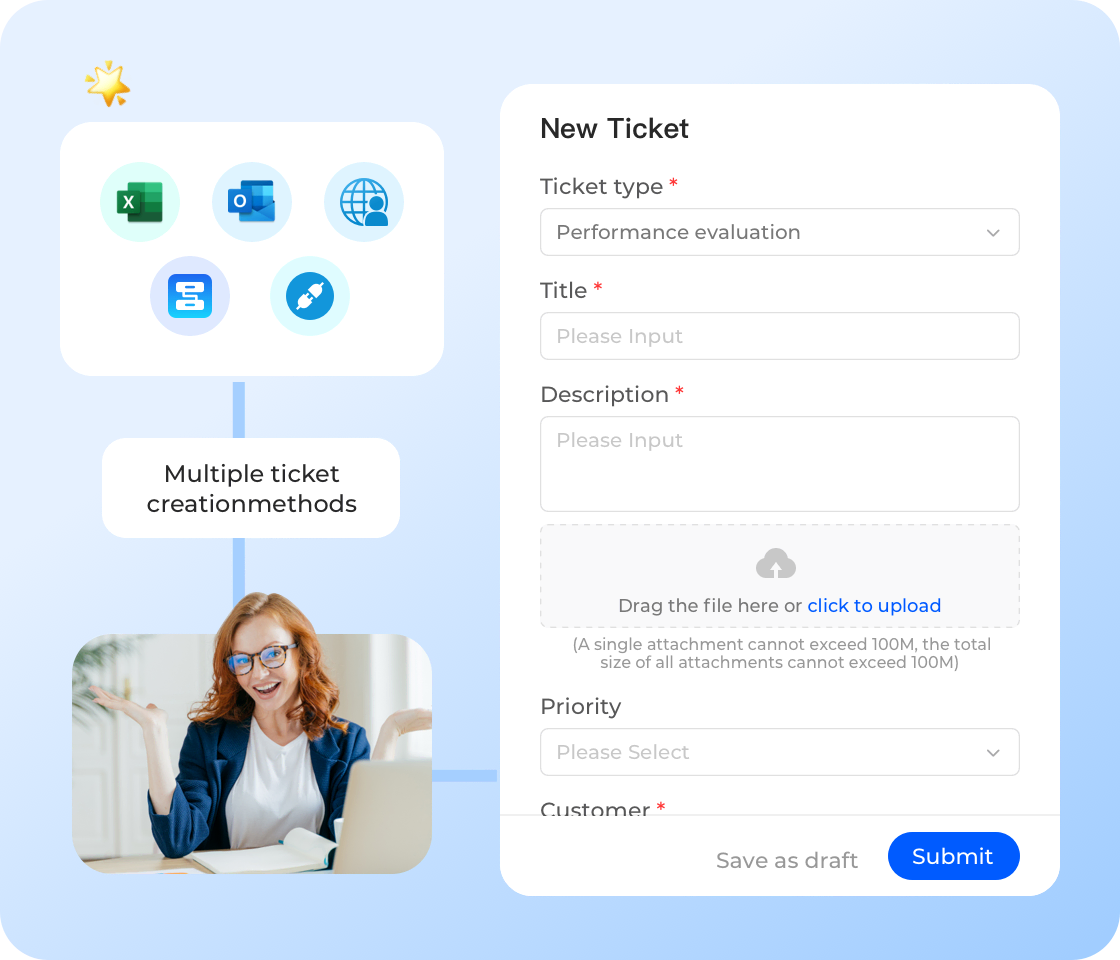
Customer requests do not arrive neatly labeled as “tickets.” They come from comments, messages, forms, and calls. Instadesk brings these interactions into a single ticketing environment, where they are automatically converted into structured tickets.
This eliminates channel silos. Agents no longer switch between tools. Managers no longer reconcile data across platforms. Every customer issue enters the same system, following the same rules.
For businesses operating across Southeast Asia, where customers prefer different channels in different countries, this unified intake ensures consistency without forcing behavioral change on users.
Manual ticket assignment slows teams down and introduces errors. Modern ticketing systems must understand tickets before agents touch them.
Instadesk uses intelligent classification to analyze ticket content and context. Tickets are categorized based on issue type, language, urgency, and service scope. They are then routed automatically to the most suitable team or agent.
This reduces response time and improves first-contact resolution. High-priority issues are surfaced immediately. Specialized requests reach agents with the right knowledge.
In real-world global service operations, this capability has enabled teams to significantly improve SLA compliance while handling higher ticket volumes without increasing headcount
A modern ticketing system must enforce service commitments, not just report on them.

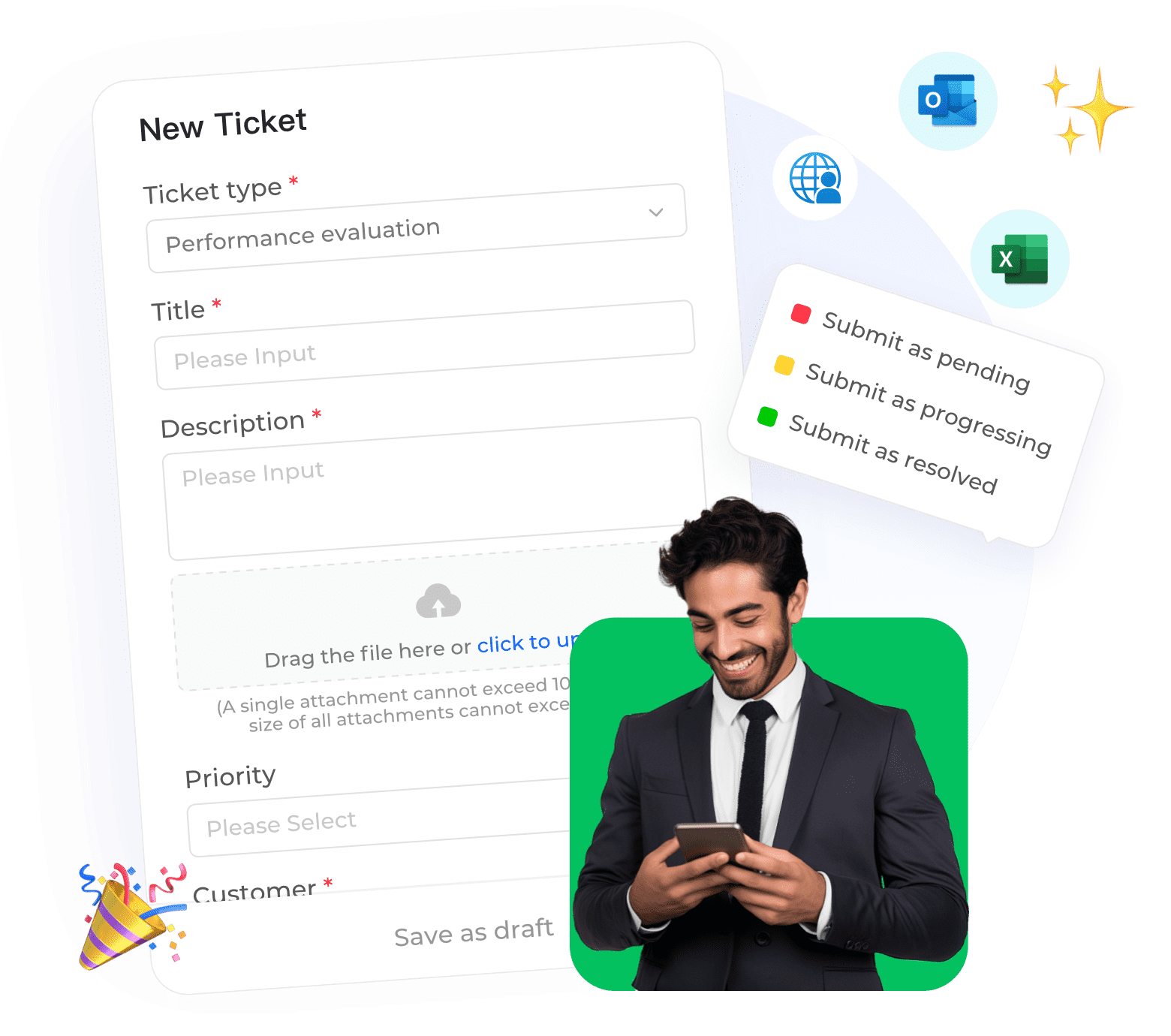
Instadesk embeds SLA rules directly into the ticket lifecycle. Response and resolution timers start automatically. Escalation paths are triggered when thresholds are at risk. Managers gain real-time visibility into SLA performance, not just retrospective reports.
This approach shifts SLA management from passive monitoring to active control. Teams can intervene before breaches occur. Resources can be reallocated dynamically during peak periods.
In complex, multi-country service environments, this has enabled organizations to maintain SLA compliance rates above 99%, even as service demand grows
Language is one of the biggest operational challenges for regional and global support teams.
A modern ticketing system must support multilingual workflows without forcing companies to build large, language-specific teams. Instadesk integrates real-time multilingual capabilities directly into ticket processing.
Tickets can be understood, categorized, and handled across languages within the same system. Agents work from a unified interface while serving customers in different markets.
This capability is especially critical for companies serving users across Southeast Asia, where English, Malay, Vietnamese, Thai, and Indonesian may all appear in daily operations. Multilingual ticket handling reduces errors, speeds up responses, and lowers operational costs.
Global operations do not stop at office hours.
Modern ticketing systems must recognize time zones and adjust workflows accordingly. Instadesk assigns and prioritizes tickets based on customer location and local business hours.
Tickets are routed to teams operating in the same or adjacent time zones whenever possible. This prevents overnight backlogs and improves customer experience without requiring 24-hour staffing in every region.
In large-scale global service scenarios, this approach has reduced response delays during off-hours by a significant margin, especially for customer bases spanning multiple continents
Tickets without context slow agents down.
A modern ticketing system must integrate deeply with internal systems such as order management, customer databases, and knowledge bases. Instadesk connects tickets with real-time customer data through standardized APIs.
When agents open a ticket, they see relevant customer history, transaction records, and prior interactions immediately. There is no need to search across systems or request additional information.
This context-rich environment shortens handling time and improves answer accuracy. It also supports more personalized service, even at scale.
No two service teams work the same way.A modern ticketing system must be configurable without becoming complex. Instadesk allows teams to design workflows that reflect real operational needs, from approval steps to escalation logic.
Managers can adjust workflows as business conditions change. New markets, new products, and new service rules can be added without rebuilding the system.
This flexibility is especially important for fast-growing companies expanding across Southeast Asia, where regulatory requirements and customer expectations vary by country.

Counting tickets is not enough.
Modern ticketing systems must provide insights that drive decisions. Instadesk offers reporting that connects ticket data with performance metrics such as response time, resolution efficiency, SLA compliance, and workload distribution.
These insights help managers identify bottlenecks, optimize staffing, and improve service design. Reporting becomes a tool for continuous improvement, not just a monthly summary.
A modern ticketing system is no longer a background tool. It is a strategic capability that shapes customer experience and operational efficiency.
Beyond tracking tickets, companies need systems that unify channels, automate decisions, enforce standards, and scale across languages and time zones. Instadesk delivers these capabilities through an intelligent, integrated ticketing system designed for real-world global operations.
For businesses operating in Malaysia, Thailand, Indonesia, Vietnam, Singapore, and beyond, adopting a modern ticketing system is not just about improving support. It is about building a service foundation that grows with the business.
Tags
Issac
Omnichannel Digital Operations: Driving Traffic Growth & Deepening User Value
You may also like
Best Ticketing System in 2026: Comparing Zendesk, Freshdesk, Instadesk, and more
Best ticketing system in 2026: comparing Zendesk, Freshdesk, Instadesk, and more is no longer a discussion about learning modules alone. For fast-growing, cross-border teams, ticketing quality is now defined by how closely it connects with real ticket workflows, real customer pressure, and real operational data.
3 Ways InstaDesk’s Ticket System Powers Cross-Department Collaboration
Instadesk Ticket System breaks down cross-departmental silos to streamline complex customer issue resolution. Its intelligent routing, custom workflows and unified platform boost efficiency and satisfaction, turning coordination into a competitive edge.
Guide to Ticket System: What is it? Functions and Brand Recommendations for Scalable Support Teams
Guide to Ticket System: What is it? Functions and Brand Recommendations is written for teams that are managing growing volumes of customer conversations across channels, languages, and regions. As businesses expand in markets such as Malaysia, Thailand, Indonesia, Vietnam, and Singapore, customer requests no longer arrive in one place or one language.
Get Started in Minutes. Experience the Difference.